
How to Use AI Without Losing Creative Quality
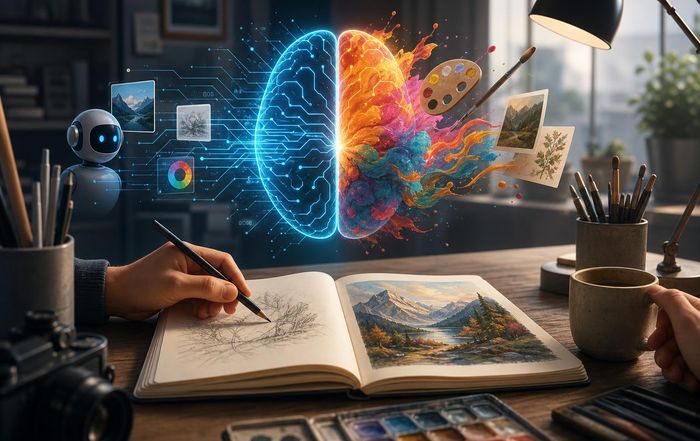
The New Creative Reality: AI as a Partner, Not a Replacement
By 2026, artificial intelligence has moved from experimental novelty to everyday infrastructure in creative and knowledge work. From copywriting and design to product development and strategic planning, teams and independent professionals are integrating AI tools at an unprecedented pace. For the visiting audience that turns online for insight on freelancing, remote work, business building, and technology, the central question is no longer whether to use AI, but how to do so without eroding the very creative quality that differentiates their work in crowded markets.
Across the United States, Europe, Asia, Africa, and South America, organizations and independent creators are discovering that AI can accelerate ideation, automate routine tasks, and expand access to markets, yet it can also encourage homogenization, overreliance on generic outputs, and subtle ethical risks if deployed without discipline. The most successful professionals are not those who simply adopt the latest tools, but those who implement structured workflows, robust quality standards, and continuous upskilling strategies that preserve originality and trust. For readers of CreateWork, understanding this balance is no longer optional; it is foundational to sustainable careers in a world where AI is embedded in every layer of work and business.
Defining Creative Quality in an AI-Driven Era
Creative quality in 2026 is measured less by novelty alone and more by a combination of originality, relevance, authenticity, and reliability. High-quality creative work must stand up to the scrutiny of clients, regulators, and increasingly sophisticated audiences who can quickly detect formulaic or derivative content. Research from organizations such as McKinsey & Company underscores that differentiation and brand distinctiveness are key drivers of long-term value, and that generic content delivers diminishing returns in competitive sectors; to understand these dynamics more deeply, professionals can explore how creative differentiation shapes business performance.
For freelancers and remote teams who rely on us to navigate the evolving economy, creative quality also has a financial dimension. High-value contracts, repeat clients, and premium pricing are awarded to those who consistently deliver insight, craft, and strategic thinking that cannot be easily replicated by off-the-shelf AI models. This is why the platform's resources on freelancers and independent work models and remote work strategies increasingly emphasize the importance of building a recognizable creative signature and process, even as AI becomes more capable and pervasive.
Human Expertise as the Anchor of AI-Enhanced Workflows
The most resilient professionals in 2026 treat AI as an amplifier of human expertise rather than a substitute for it. They begin with deep domain knowledge, lived experience, and a clear point of view, then use AI to explore scenarios, accelerate research, and refine execution. This approach aligns with guidance from institutions like the MIT Sloan School of Management, which highlights that human judgment remains critical in AI-augmented decision-making.
For example, a content strategist in London or Berlin might use AI to generate alternative structures for a long-form report, but will still rely on their understanding of the client's market, regulatory environment, and cultural context to decide what to keep, what to discard, and what to rewrite from scratch. Similarly, a product designer in Singapore or Toronto can use AI tools to iterate quickly on interface layouts, yet they will still conduct user research and apply principles from resources such as the Nielsen Norman Group to ensure the final experience is accessible, intuitive, and emotionally resonant; professionals can deepen their user experience expertise to complement AI-enabled prototyping.
On CreateWork, this philosophy is reflected in guidance for business leaders adopting technology and for founders exploring business startup strategies, where AI is framed as a force multiplier for skilled teams, not a shortcut that replaces the need for strategy, ethics, and craftsmanship.
Designing AI Workflows That Protect Originality
Preserving creative quality begins with intentional workflow design. Rather than allowing AI tools to dictate the structure of work, high-performing teams define clear stages where AI can add value and equally clear boundaries where human intervention is mandatory. This often includes using AI for divergent thinking and exploration, while reserving convergence, synthesis, and final judgment for human experts.
A marketing agency in New York or Paris, for instance, might use AI to generate dozens of campaign concepts, but will implement a review framework that evaluates each idea against brand values, legal constraints, and cultural nuance, similar to how organizations consult guidance from the World Intellectual Property Organization when navigating intellectual property and originality. In practice, this means treating AI outputs as raw material rather than finished products, ensuring that the final creative direction reflects human insight into audience psychology and market dynamics.
For the CreateWork audience, this structured approach is particularly relevant to those managing distributed teams and remote creatives, where maintaining consistent quality can be challenging. By integrating AI checkpoints into documented processes, and by leveraging internal resources like the platform's business operations guidance, leaders can standardize expectations without stifling individual expression or local market adaptation.
Guardrails for Authenticity, Bias, and Ethical Integrity
As AI-generated content becomes more prevalent, questions of authenticity and ethics take center stage. Businesses and freelancers alike must ensure that their use of AI does not introduce hidden biases, factual inaccuracies, or deceptive practices that could undermine trust with clients, regulators, or the public. Organizations such as the OECD and the European Commission have published frameworks for trustworthy AI and responsible innovation and AI regulation in Europe, which are shaping policy and expectations in many of the countries where CreateWork readers operate.
In practical terms, this means implementing human review for any AI-generated content that touches on regulated topics such as finance, health, employment, or legal matters. It also means disclosing AI involvement where appropriate, especially in contexts where audiences might reasonably expect human authorship. For creative professionals in sectors like journalism, design, and advertising, aligning with standards from organizations such as the World Economic Forum, which explores ethical AI adoption in business, can help maintain credibility and avoid reputational damage.
On the CreateWork platform, the emphasis on employment trends and workforce dynamics increasingly includes guidance on AI literacy, bias mitigation, and responsible data use. Freelancers and remote workers who understand these ethical dimensions are better positioned to advise clients, negotiate fair contracts, and differentiate themselves as trustworthy partners in AI-enabled projects.
Upskilling for an AI-Augmented Creative Career
Sustainable creative quality in 2026 is inseparable from continuous learning. Professionals across the United States, United Kingdom, Germany, India, Brazil, and beyond are recognizing that static skill sets are no longer sufficient; instead, they must develop a blend of domain expertise, AI literacy, and meta-skills such as critical thinking, systems thinking, and cross-cultural communication. Institutions like Coursera and edX provide access to AI and data literacy programs that help creators understand the capabilities and limitations of the tools they use, while universities and research centers publish open resources that deepen conceptual understanding.
For the CreateWork audience, this commitment to learning is reflected in the platform's focus on upskilling and career development, where AI is framed as both a catalyst and a pressure point. A freelance designer in Sydney or Cape Town who invests time in learning prompt engineering, data visualization, and human-centered AI design will be able to command higher rates and win more complex projects than peers who treat AI as a black box. Similarly, a content strategist in Amsterdam or Tokyo who studies information architecture, storytelling frameworks, and behavioral science can use AI to accelerate research and drafting, while still delivering work that reflects a depth of insight beyond automated outputs.
Financial and Strategic Implications of AI-Enhanced Creativity
AI is not only reshaping how creative work is produced; it is also transforming how that work is valued and monetized. Businesses that integrate AI effectively can reduce production costs, accelerate time-to-market, and experiment with new offerings, yet they must also avoid the trap of commoditizing their own services by relying too heavily on generic outputs. Research from institutions such as the Harvard Business Review highlights that strategic use of AI can expand value pools rather than simply cut costs, especially when organizations focus on new products, services, and experiences enabled by the technology.
For freelancers, agencies, and startups, this translates into a need to rethink pricing models, scopes of work, and value propositions. A copywriter in Toronto or Madrid who positions themselves as an "AI-enabled brand strategist" can justify premium fees by combining rapid AI-assisted drafting with deep brand positioning expertise, whereas someone who markets only "AI-generated content" is more likely to face price pressure. The CreateWork sections on money and income strategies and finance and business planning provide frameworks for understanding these shifts, helping professionals structure retainers, performance-based contracts, and advisory services that reflect the full value of their AI-augmented capabilities.
From a macroeconomic perspective, organizations such as the International Monetary Fund and the World Bank are tracking how AI adoption influences productivity and global labor markets, shaping policy debates in North America, Europe, and Asia. For creative professionals, staying informed about these trends is not an academic exercise; it informs decisions about which markets to enter, which skills to develop, and how to future-proof careers in an evolving global economy, a topic explored in depth in CreateWork's coverage of the economy and future of work.
Integrating AI into Business and Startup Operations
For founders, small business owners, and startup teams, AI presents both a competitive advantage and an operational challenge. Integrating AI into marketing, product development, customer support, and internal processes requires more than purchasing tools; it demands clear governance, talent strategies, and change management. Organizations like Startup Genome and Y Combinator have highlighted how AI-native startups design their operations and culture, emphasizing experimentation, rapid iteration, and a deep respect for data quality.
On CreateWork, the intersection of business startup strategy, AI automation, and productivity tools is increasingly central to the platform's guidance. A founder in San Francisco, Stockholm, or Seoul might use AI to automate initial customer support interactions, but will still invest in human-led onboarding and relationship management for key accounts. A creative studio in Milan or Barcelona might rely on AI to generate mood boards and visual explorations, yet will preserve human-led art direction to maintain a distinctive brand aesthetic and ensure cultural sensitivity across markets.
By approaching AI integration as a strategic design challenge rather than a procurement decision, leaders can build organizations that harness automation for efficiency while reserving human creativity, empathy, and judgment for the highest-value activities. This balance not only protects creative quality but also supports healthier workplace cultures and more sustainable lifestyles, aligning with the broader work-life themes explored in cool lifestyle section.
Building a Personal Creative Brand in an AI-Saturated Market
In a world where AI can generate competent content at scale, personal brand and creative identity become more, not less, important. Clients and employers across New York, London, Berlin, Singapore, and beyond are seeking individuals and teams whose work reflects a distinctive voice, perspective, and standard of excellence. To achieve this, professionals must curate portfolios that clearly differentiate between AI-assisted and fully human-created work, articulate their process, and demonstrate the thinking that underpins their outputs.
Platforms like Behance and Dribbble remain influential for visual creatives, while LinkedIn continues to shape professional narratives; understanding how to present a coherent creative identity online is essential. For the CreateWork community, this branding effort is supported by the platform's holistic guidance on creative careers, remote work positioning, and overall career strategy, helping individuals in diverse countries from Canada to South Africa to Japan articulate how they use AI as a tool without allowing it to define or dilute their unique value.
By 2026, the professionals who thrive are those who combine technical fluency in AI with a clear, human-centered creative philosophy, demonstrating not only what they can produce, but how they think, decide, and uphold standards in an environment where automation is ubiquitous.
The Role of CreateWork in a High-AI, High-Trust Future
As AI continues to reshape creative industries and knowledge work worldwide, CreateWork positions itself as a trusted guide for freelancers, remote professionals, founders, and organizations seeking to navigate this transition with confidence. The platform's focus on experience, expertise, authoritativeness, and trustworthiness reflects an understanding that tools alone do not create value; it is the combination of human judgment, ethical integrity, and strategic implementation that ultimately determines outcomes.
By curating insights across business strategy, technology trends, AI automation, and career development, the site helps our visitors everywhere build resilient, future-ready careers and enterprises.
In this emerging landscape, using AI without losing creative quality is not a single decision but an ongoing practice: designing thoughtful workflows, investing in upskilling, implementing ethical guardrails, and cultivating a strong personal and organizational brand. For those who embrace this discipline, AI becomes not a threat to creativity but a catalyst for deeper, more impactful work-and CreateWork remains a central partner in that journey.
