
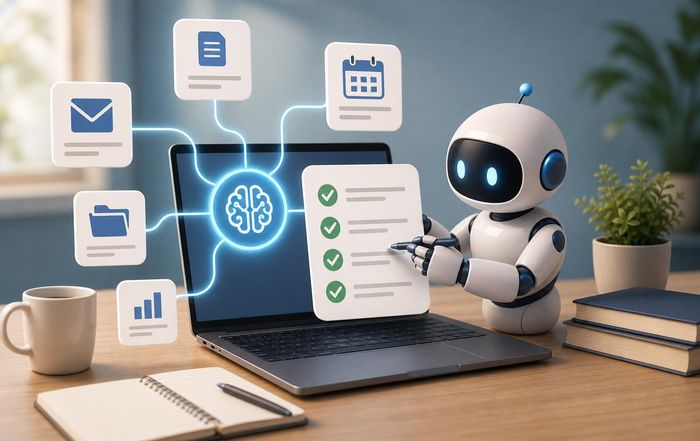
AI Automation for Repetitive Freelance Tasks
The New Reality of Freelance Work
Freelance work has evolved from a marginal career choice into a central pillar of the global economy, with independent professionals in the United States, Europe, Asia and beyond increasingly relying on digital platforms, cross-border collaboration and advanced automation to build sustainable incomes and careers. As organizations from Fortune 500 enterprises to fast-scaling startups embrace distributed teams and outcome-based contracts, freelancers across design, software engineering, marketing, consulting and the creative industries are discovering that their greatest constraint is no longer access to clients, but the sheer volume of repetitive operational work required to keep their businesses running. In this context, AI automation has moved from being a speculative trend to becoming a practical, everyday capability that reshapes how independent professionals manage their time, deliver value and differentiate themselves in a competitive marketplace, and it is this intersection of automation and independence that CreateWork is uniquely positioned to explore and support for its global audience.
Why Repetition Is the Hidden Cost in Freelancing
For freelancers in New York, London, Berlin, Toronto, Sydney, Singapore or São Paulo, the promise of independence is frequently tempered by the reality that a significant proportion of their working hours is consumed by activities that are necessary but not directly billable, such as drafting proposals, managing invoices, responding to routine client questions, preparing status updates, organizing files and updating project management systems. Research from organizations such as the World Economic Forum demonstrates that knowledge workers spend a substantial portion of their week on repetitive digital tasks rather than on high-value, creative or strategic work; readers can learn more about the shifting nature of work and skills to understand the macro forces behind this trend. For freelancers, who lack the administrative support structures of large employers, these tasks translate directly into lost revenue opportunities, longer working hours and greater risk of burnout, especially in highly competitive markets such as the United States, the United Kingdom and Germany where client expectations around responsiveness and quality are particularly high.
The Maturation of AI Automation in 2026
The technological foundations that enable automation of repetitive freelance tasks have matured significantly since the early wave of AI hype, with practical, accessible tools now built on top of advances in large language models, computer vision, workflow orchestration and low-code platforms. Major technology providers such as Microsoft, Google and OpenAI have integrated AI co-pilots into productivity suites, cloud services and development environments, making it easier for independent professionals to embed intelligent assistance directly into their daily workflows; those interested in understanding how these platforms are evolving can explore resources from Microsoft on AI in productivity and Google's AI research and tools. At the same time, a fast-growing ecosystem of specialized SaaS products, many of which target freelancers and small businesses explicitly, has emerged to automate tasks ranging from scheduling and invoicing to content generation and analytics, and the result is that automation is no longer a privilege reserved for large corporations with dedicated IT teams, but a realistic, affordable and often essential capability for solo professionals and small agencies worldwide.
Core Freelance Tasks Ripe for Automation
The most immediate opportunities for AI automation in freelancing lie in workflows that are structured, repetitive and data-rich, where patterns can be learned and decisions can be made based on clear rules or historical behavior, and where the freelancer's time adds limited unique value compared with what an intelligent system can provide. For example, client communication can be partially automated through AI-assisted email drafting, chatbots that handle routine inquiries and summarization tools that condense long threads into concise action points, while proposal generation can be accelerated by systems that analyze previous successful bids, client profiles and industry benchmarks to produce tailored drafts that the freelancer then refines. Administrative processes such as invoicing, expense tracking and payment reconciliation can be streamlined through automation integrated with accounting platforms and digital wallets, a topic that aligns closely with the financial strategies discussed on CreateWork's dedicated money and finance resources, where independent professionals can explore practical approaches to managing cash flow in an increasingly automated environment.
Project management and time tracking represent another domain where AI automation is rapidly becoming indispensable, with tools that automatically categorize tasks, estimate timelines based on historical performance, flag risks and generate status reports that can be shared with clients in North America, Europe, Asia or Africa without manual compilation. Creative and technical freelancers are also using AI to automate aspects of their core production work, such as generating first-draft copy, producing code snippets, transcribing interviews, cleaning datasets or producing visual variations, while still retaining human oversight and creative direction; those interested in the broader technological context can explore emerging automation technologies and their implications for productivity and employment.
Experience and Expertise: Where Humans Stay in the Loop
Despite the breadth of tasks that can now be automated, the most successful freelancers in 2026 are those who understand that AI is a force multiplier for human experience and expertise, not a replacement for it, and who design their workflows so that automation handles the predictable while they focus on judgment, strategy and relationship-building. In fields such as consulting, legal services, design, engineering and specialized content creation, clients in markets from Switzerland to Japan and from South Africa to Brazil are not simply purchasing outputs, but are seeking trusted advisors who can interpret context, weigh trade-offs, manage risk and align deliverables with broader business objectives. Independent professionals who leverage AI to accelerate research, scenario analysis or prototyping, while maintaining clear human accountability for recommendations and final decisions, are better positioned to demonstrate the kind of authoritativeness and reliability that discerning clients expect, particularly in regulated or high-stakes sectors.
This human-in-the-loop approach is central to the philosophy promoted by CreateWork, which emphasizes that sustainable freelance careers are built on a combination of technical fluency, domain expertise and continuous learning rather than on the latest tools alone, a perspective that is reflected in its guidance on upskilling and professional development for global independent workers. Freelancers who treat AI automation as an apprentice or co-pilot, delegating routine work while retaining control over quality, ethics and client communication, are able to scale their impact without compromising the trust they have built with clients in diverse cultural and regulatory environments across North America, Europe, Asia-Pacific and beyond.
Building Authoritativeness in an Automated Era
As AI systems take on more of the lower-level work, the question of how freelancers establish and maintain authoritativeness becomes more pressing, particularly when clients can access automated tools themselves. Independent professionals in 2026 are increasingly differentiating themselves not merely by technical skill, but by their ability to curate, orchestrate and govern automation in ways that align with business goals, compliance requirements and cultural nuances. In the United States and the European Union, for example, emerging AI regulations and data protection laws require careful handling of client data, model outputs and automated decision-making; readers can stay informed about AI governance and policy developments through resources provided by the OECD and related institutions. Freelancers who can explain how they use automation, which safeguards are in place, and how they ensure accuracy and fairness in their work are more likely to be perceived as trusted partners rather than mere service providers.
To strengthen their authority, many independent professionals now integrate AI-enhanced research and analytics into their deliverables, drawing on reputable sources such as industry analysis from Gartner or economic insights from the International Monetary Fund to contextualize their recommendations and demonstrate a sophisticated understanding of macro trends. By combining such external intelligence with their own project experience and sector-specific knowledge, freelancers can deliver insights that clients cannot easily replicate with generic tools, and this capacity to synthesize information into actionable guidance has become a key differentiator in competitive markets from Canada to Singapore and from the Netherlands to South Korea.
Trustworthiness, Data Ethics and Client Confidence
Trust remains the foundation of every successful freelance engagement, and the introduction of AI automation into client-facing and back-office workflows raises new questions about confidentiality, data security, bias and transparency that independent professionals must address proactively if they wish to build long-term relationships. Clients in sectors such as finance, healthcare, legal services and government are particularly sensitive to how their data is handled, and freelancers serving these industries must be prepared to articulate clear policies about data storage, model usage, third-party tools and retention practices, aligning their operations with best practices outlined by organizations such as the National Institute of Standards and Technology (NIST) on AI risk management and guidance from the European Commission on trustworthy AI. Transparent communication about when automation is used, how outputs are validated and what human review steps are in place is increasingly seen as a marker of professionalism, particularly in mature markets like Germany, France and the Nordics where regulatory compliance and ethical considerations are prominent.
For freelancers who operate across borders, trustworthiness also extends to understanding and respecting the different legal and cultural expectations that apply in various jurisdictions, from data localization requirements in certain Asian markets to evolving privacy standards in North America and Europe. CreateWork addresses these complexities by highlighting practical strategies for independent professionals to design compliant, resilient operations, complementing broader discussions of employment trends and regulatory shifts that shape the global freelance landscape. By embedding data ethics and governance into their automated workflows, freelancers can reassure clients that efficiency gains do not come at the expense of integrity or accountability.
Practical Automation Strategies for Freelancers
For freelancers who are still in the early stages of adopting AI automation, the most effective approach is often to begin with a clear map of their current workflows, identifying which tasks are repetitive, rule-based and time-consuming, and then selecting tools that integrate smoothly with their existing stack rather than attempting wholesale transformation overnight. Time tracking and calendar management can often be automated with minimal disruption, followed by templated email responses, basic bookkeeping and document organization, while more advanced automation such as AI-assisted coding, content generation or analytics can be layered on as confidence and familiarity grow. Resources from organizations like the Harvard Business Review on AI and productivity can help freelancers understand where automation delivers the greatest returns and how to avoid common pitfalls such as over-automation or tool sprawl.
Within the CreateWork ecosystem, freelancers can align these practical steps with broader business-building guidance, drawing on insights from the platform's sections on remote work strategies, business operations and scaling and AI automation trends to design workflows that support both current projects and future growth. For those launching or expanding independent practices in 2026, integrating automation into the foundational design of their operations-rather than treating it as an afterthought-can significantly improve margins, responsiveness and client satisfaction, especially for professionals serving multiple time zones and markets across Europe, Asia-Pacific, Africa and the Americas.
Economic and Lifestyle Implications of Automation for Freelancers
The rise of AI automation is not only a technical or operational phenomenon; it also has profound implications for the economics and lifestyle of freelance work, influencing pricing models, project selection, work-life balance and long-term career planning. As repetitive tasks are automated, high-performing freelancers often find that they can deliver comparable or greater value in less time, enabling them to shift from hourly billing toward project-based or value-based pricing structures that better reflect their expertise and the outcomes they create for clients, an evolution that aligns with broader trends documented by institutions such as the World Bank on digital economies and independent work. This shift can be particularly advantageous in high-cost markets like Switzerland, Norway and Denmark, where clients are accustomed to paying premiums for specialized skills and where freelancers must manage higher living expenses.
At the same time, automation can support more sustainable lifestyles by reducing the need for constant multitasking, late-night administrative work and context switching, thereby allowing independent professionals to reclaim time for rest, learning, family and creative exploration. On CreateWork, this intersection between technology, income and wellbeing is reflected in its coverage of lifestyle design for remote and freelance workers, which emphasizes that the ultimate goal of automation is not simply to do more, faster, but to enable more intentional choices about how and where to invest one's energy. By strategically combining automation with disciplined boundaries and thoughtful client selection, freelancers in cities from Los Angeles to London and from Bangkok to Helsinki can construct careers that are both financially resilient and personally fulfilling.
Positioning Freelancers for the Future of Work
Looking ahead to the remainder of the decade, AI automation is poised to become even more deeply embedded in the fabric of freelance work, shaping not only how tasks are executed but also how opportunities are discovered, matched and evaluated across global talent marketplaces. Platforms that connect independent professionals with clients are increasingly incorporating AI-driven recommendation systems, skills assessments and project scoping tools, and freelancers who understand how these systems operate will be better equipped to position themselves effectively, whether they are targeting clients in North America, Europe, Asia or emerging markets in Africa and South America. Reports from institutions such as the International Labour Organization on platform work and digital labor provide valuable context on how these dynamics may evolve and what they mean for income security, bargaining power and career mobility.
Within this shifting landscape, CreateWork serves as a dedicated hub for freelancers seeking to navigate the convergence of business, technology and personal development, offering interconnected resources on freelancing and independent careers, business startups and entrepreneurship, technology and productivity tools and the broader global economy. By combining practical guidance with a focus on experience, expertise, authoritativeness and trustworthiness, the platform encourages freelancers not merely to adopt AI automation as a set of tools, but to integrate it thoughtfully into their business models, ethical frameworks and long-term strategies.
Conclusion: Automation as a Big Advantage or Risk?
AI automation for repetitive freelance tasks is no longer an optional enhancement but a strategic necessity for independent professionals who wish to remain competitive, profitable and resilient in a rapidly evolving global marketplace. The freelancers who thrive in this environment are those who recognize that automation is most powerful when it amplifies, rather than replaces, human judgment, creativity and relationship-building, and who invest in the skills, systems and ethical practices required to deploy AI responsibly. As clients from the United States, the United Kingdom, Germany, Canada, South Africa, Brazil and beyond seek partners who can deliver both efficiency and insight, freelancers who master this balance will be best positioned to secure high-value engagements and build enduring reputations.
For the creative hipster community that turns to CreateWork for guidance on freelancing, remote work, business, technology, finance and lifestyle, AI automation represents both a challenge and an opportunity: a challenge to rethink established ways of working, and an opportunity to design more scalable, sustainable and fulfilling careers. By approaching automation with a clear focus on experience, expertise, authoritativeness and trustworthiness, freelancers can ensure that they remain at the center of value creation in the digital economy, leveraging machines to handle the repetitive so that humans can focus on the meaningful.
