
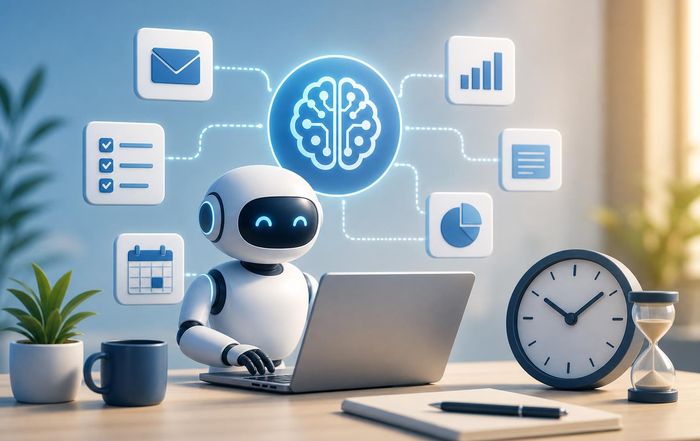
AI Automation Guide for Better Time Management
The Strategic Imperative of Time Management in an Automated Era
Time has become the most critical non-renewable asset for professionals, founders, and organizations navigating an increasingly digital and distributed economy, and the emergence of practical, accessible artificial intelligence has transformed time management from a personal discipline into a strategic business capability. Across the United States, Europe, Asia, and other major markets, leaders are discovering that those who successfully integrate AI automation into their daily workflows gain not only efficiency, but also a decisive competitive edge in creativity, decision-making, and resilience. For the global audience of CreateWork-freelancers, remote workers, entrepreneurs, and business leaders-this shift is particularly relevant, as their livelihoods often depend on how effectively they convert hours into value, income, and long-term opportunity.
In this environment, AI automation is no longer a futuristic concept discussed only in research labs or at technology conferences; it is now embedded in productivity suites, communication platforms, financial systems, and even personal devices, quietly orchestrating tasks that once consumed hours of human effort. Tools powered by large language models, predictive analytics, and intelligent process automation are reshaping how professionals schedule their days, manage their finances, coordinate distributed teams, and launch new ventures. Understanding this landscape is essential for anyone seeking to build a sustainable, flexible, and profitable career in a world where work is increasingly remote, cross-border, and project-based. Readers who wish to explore how these trends intersect with broader shifts in the labor market can review CreateWork's perspective on remote work and the future of employment.
From Personal Productivity to Systemic Automation
Historically, time management advice focused on individual habits such as prioritizing tasks, reducing distractions, and adopting frameworks like time blocking or the Pomodoro technique, yet these methods assumed that humans would continue to manually manage the majority of their workflows. The arrival of AI-powered tools has fundamentally altered this assumption, allowing individuals and organizations to shift from micro-managing tasks to designing systems in which software handles routine work, leaving humans to focus on judgment, creativity, and relationship-building. This systemic view of productivity is now central to modern business strategy, particularly for startups and small enterprises that must scale quickly without adding proportional headcount. Those interested in building lean, automated ventures can explore CreateWork's guidance on business startup strategies in a digital-first economy.
Industry reports from organizations such as the World Economic Forum indicate that automation and AI will continue to reshape job content rather than simply eliminate roles, meaning that professionals who learn to orchestrate AI tools will likely outperform those who rely solely on manual methods. Readers can review broader labor market forecasts and global employment trends through the International Labour Organization, which highlight the increasing premium on digital skills and adaptive learning. In this context, AI automation for time management is not a marginal optimization; it is a core competency for navigating a rapidly evolving employment landscape across North America, Europe, Asia, and beyond.
Core Principles of AI-Driven Time Management
Effective use of AI for time management begins with a clear understanding of what should be automated and why, since indiscriminate adoption of tools can create complexity rather than clarity. The most successful freelancers, remote teams, and businesses approach automation with a systems mindset, identifying repetitive, rules-based, or data-intensive activities that consume significant time yet do not require deep human judgment. Typical candidates include scheduling, inbox triage, document drafting, reporting, invoicing, expense categorization, and multi-step workflows that span several applications, and by delegating these tasks to AI, individuals reclaim cognitive bandwidth for strategic work such as client acquisition, product development, or creative exploration. Those interested in a structured approach to redesigning their workday may find value in CreateWork's curated guides to productivity and workflow optimization.
A second principle involves setting clear boundaries around human oversight, data privacy, and quality control, since AI systems are powerful but not infallible. Professionals must understand what data is being processed, how it is stored, and what risks exist around confidentiality, particularly when handling client information or sensitive financial records. Organizations such as the U.S. Federal Trade Commission and the European Commission provide evolving guidelines on responsible AI use in business, which can inform governance policies for companies operating in regulated sectors or across multiple jurisdictions. By combining automation with thoughtful oversight, businesses can harness AI's strengths while maintaining trust with clients, partners, and regulators.
Practical AI Use Cases for Freelancers and Remote Professionals
For freelancers and independent consultants, time is directly linked to revenue, project capacity, and lifestyle flexibility, making AI automation particularly impactful. Intelligent scheduling assistants can analyze calendars across time zones, propose optimal meeting slots, and automatically insert buffers to protect focus time, which is especially valuable for those working with clients in regions such as the United States, United Kingdom, Germany, and Singapore. Email management tools that leverage natural language processing can categorize messages by urgency, draft suggested replies, and surface key action items, enabling professionals to reduce inbox time while maintaining responsiveness. Those seeking to structure their independent careers around higher-value work can explore CreateWork's resources dedicated to freelancers and independent professionals.
Content-focused freelancers, including writers, designers, and marketers, are also leveraging AI to accelerate ideation and production without sacrificing originality. Generative models can assist in outlining articles, summarizing research, or generating alternative creative concepts, while human experts retain control over final narrative, tone, and brand alignment. The Harvard Business Review has examined how knowledge workers can responsibly integrate generative AI, highlighting the importance of combining machine speed with human judgment to avoid generic or inaccurate outputs. For creative professionals in cities from London to Sydney, this hybrid approach can translate into more client capacity, faster turnaround times, and the ability to offer higher-value strategic services.
Financial management is another area where AI can dramatically improve time efficiency for independent workers. Automated expense categorization, tax estimation, and cash-flow forecasting tools now integrate with banking and invoicing platforms, reducing the time spent on bookkeeping while improving financial visibility. Professionals interested in building a more resilient financial foundation around their work can explore CreateWork's insights on money management and income planning, and can complement this with educational content from organizations such as the OECD on household financial resilience and digital finance.
AI Automation in Small and Growing Businesses
For small businesses and startups in markets such as the United States, Canada, Australia, and across Europe and Asia, AI automation offers a way to scale operations without immediately expanding payroll, thereby preserving runway and improving margins. Intelligent customer relationship management systems can score leads, recommend follow-up sequences, and personalize communication based on behavioral data, freeing sales teams to focus on high-value conversations rather than manual data entry. Similarly, AI-enhanced marketing platforms can segment audiences, optimize ad spend, and generate performance reports, enabling founders to understand campaign effectiveness without dedicating full-time staff to analytics. Those exploring how to embed automation into their operating model can review CreateWork's coverage of technology trends transforming modern businesses.
Operations and back-office functions are also fertile ground for automation. AI-powered workflow engines can coordinate tasks across finance, HR, and logistics systems, ensuring that routine processes such as onboarding, invoice approval, and inventory updates occur reliably with minimal human intervention. Research from McKinsey & Company on automation and the future of work suggests that companies that systematically redesign processes around automation achieve significantly higher productivity gains than those that simply layer tools on top of existing workflows. For founders and managers, the implication is clear: the goal is not merely to add AI tools, but to re-architect how time is allocated across the organization.
At the same time, leaders must consider the human dimension of automation, ensuring that employees understand how AI will support rather than replace their contributions. Transparent communication, clear role definitions, and targeted training can help teams in regions from Germany to Japan build confidence in new tools while avoiding resistance or fear. Organizations that actively invest in employee development, including AI literacy and digital skills, are better positioned to attract and retain talent in a competitive labor market. Readers can explore broader economic implications of automation and labor through CreateWork's analysis of the global economy and structural change.
Building a Personal AI Automation Stack
For individuals and teams, designing an effective AI automation stack involves selecting a coherent set of tools that integrate well and align with specific goals, rather than assembling a random collection of applications. Many professionals now start with AI-enhanced office suites, communication platforms, and task managers, then layer specialized tools for areas such as coding assistance, document analysis, financial tracking, or language translation. The key is to ensure that each tool serves a clear purpose within the broader workflow, reducing friction rather than adding complexity. Those seeking a structured approach to evaluating and adopting tools can refer to CreateWork's recommendations on productivity tools and digital workflows.
Security and compliance considerations play an increasingly important role when constructing this stack, especially for businesses handling client data in regulated industries or across borders. Resources from organizations such as the National Institute of Standards and Technology (NIST) on AI risk management and cybersecurity can help decision-makers evaluate vendor practices and design internal policies that balance innovation with protection. For teams operating in multiple jurisdictions, aligning tool choices with both local regulations and global standards is essential to avoid costly compliance issues while maintaining operational agility.
Upskilling for an AI-Augmented Worklife
As AI tools take over routine tasks, the relative value of uniquely human skills-critical thinking, complex problem-solving, emotional intelligence, and creative synthesis-continues to rise, and professionals who combine these strengths with fluency in AI workflows are likely to see the greatest career upside. Upskilling is therefore not optional; it is a continuous requirement for long-term employability and mobility, whether one is a freelancer in Brazil, a product manager in Sweden, or a founder in Singapore. Readers interested in planning their learning journey can explore CreateWork's dedicated content on upskilling for the modern workforce.
Global institutions such as the World Bank and UNESCO have emphasized the importance of lifelong learning and digital skills in their discussions of future-ready education and training, particularly in the context of AI and automation. For individuals, this translates into a practical need to understand not only how to use specific tools, but also how to design workflows, interpret AI outputs, and maintain ethical standards when delegating tasks to machines. Over time, the ability to collaborate effectively with AI systems will become as fundamental as traditional computer literacy, shaping hiring decisions, promotion criteria, and entrepreneurial success.
Balancing Automation, Wellbeing, and Lifestyle
One of the less discussed but highly significant impacts of AI automation is its potential to reshape lifestyle choices, enabling more flexible work arrangements, portfolio careers, and cross-border collaboration. When routine tasks are automated, professionals can choose to allocate reclaimed time to higher earnings, creative projects, family, or personal development, depending on their priorities and stage of life. For many remote workers and digital nomads operating across time zones from New Zealand to South Africa, this flexibility can translate into a more sustainable rhythm of work and rest, provided that boundaries are consciously designed. Those reflecting on how to align career design with personal wellbeing can explore CreateWork's perspectives on lifestyle and work-life integration.
However, there is also a risk that automation simply accelerates the pace of work, leading to expectations of constant availability and higher output without corresponding increases in autonomy or compensation. Research from organizations such as the World Health Organization on work-related stress and mental health underscores the importance of managing workload intensity, digital overload, and boundary erosion in an always-connected environment. To ensure that AI serves human wellbeing rather than undermines it, both individuals and organizations must deliberately use automation to create space for rest, reflection, and deep work, rather than simply filling every available minute with additional tasks.
The Part of CreateWork in an AI-Enabled Future of Work
As AI automation continues to reshape how time is managed, how work is structured, and how value is created across global markets, platforms that help individuals and organizations navigate this transition will become increasingly important. CreateWork positions itself at this intersection of technology, business, and human potential, providing insights, frameworks, and practical guidance for freelancers, remote teams, founders, and corporate leaders who wish to harness AI responsibly and strategically. From exploring AI automation and its impact on employment and business models to offering perspectives on finance and economic resilience in a volatile world, CreateWork aims to support readers in turning technological disruption into opportunity.
For professionals and organizations seeking to thrive in 2026 and beyond, the central question is not whether AI automation will transform time management, but how intentionally they will participate in that transformation. Those who treat automation as a partner in designing better workdays, smarter businesses, and more sustainable lifestyles are likely to emerge stronger, more adaptable, and more fulfilled. By engaging with resources from CreateWork and trusted global institutions such as the OECD, World Economic Forum, and International Labour Organization, readers can build the expertise, authoritativeness, and trustworthiness needed to lead in an AI-augmented world of work.
