
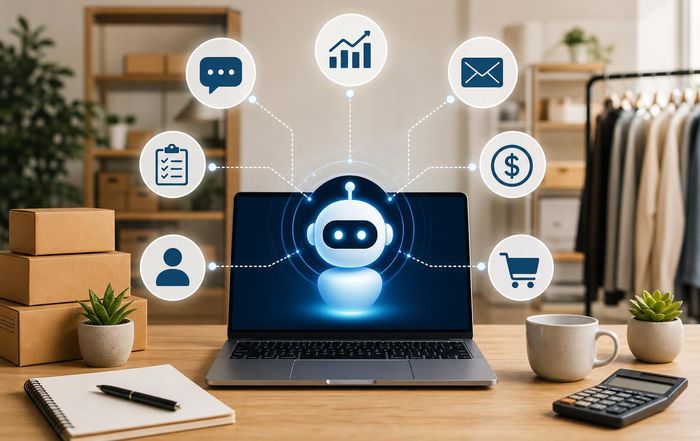
AI Tools for Smarter Small Business Operations
The New Operating System of Small Business
Artificial intelligence has quietly become the operating layer of successful small businesses rather than a futuristic add-on, and across markets from the United States and the United Kingdom to Germany, Singapore, Brazil, and South Africa, owners are discovering that AI is no longer about replacing people but about orchestrating leaner, smarter, more resilient operations. On CreateWork, this fascinating shift is especially visible among freelancers, remote-first startups, and digital-native small firms that treat AI as a core capability rather than a side experiment, integrating it into everything from client acquisition and pricing models to workforce planning and creative production. While large enterprises have long had access to advanced analytics and automation, the real story is that cloud-based AI tools, accessible via subscription and no-code interfaces, now give a solo consultant in Toronto or a five-person agency in Berlin operational leverage that previously required entire departments.
This transformation is being accelerated by mature cloud infrastructure from providers such as Amazon Web Services and Microsoft Azure, along with robust AI platforms from firms like Google and OpenAI, which together have reduced the technical barriers to deploying sophisticated models for forecasting, personalization, and workflow automation. As regulatory frameworks in regions such as the European Union evolve, with initiatives like the EU AI Act shaping standards for transparency and risk management, small business leaders are also learning that intelligent adoption of AI is not only a competitive advantage but a governance and compliance issue. In this environment, CreateWork positions itself as a practical hub, helping entrepreneurs and independent professionals understand how to deploy AI in ways that are commercially sound, ethically grounded, and aligned with sustainable growth.
From Hype to Practical AI: What Small Businesses Actually Use
The most meaningful AI adoption in small businesses in 2026 is not in exotic robotics or speculative metaverse projects but in the mundane, high-frequency tasks that previously consumed human time and attention, and owners across North America, Europe, and Asia are discovering that the fastest returns come from automating email triage, invoice processing, lead qualification, and routine customer queries. Natural language models now power intelligent assistants embedded in tools like Microsoft 365, Google Workspace, and Slack, enabling staff to summarize lengthy documents, generate first drafts of proposals, and extract action items from meetings with a level of speed and consistency that fundamentally changes how knowledge work is organized. For many founders, this is the first tangible experience of AI as a daily collaborator rather than a distant concept.
At the same time, specialized SaaS platforms are re-architecting core business functions around AI. E-commerce owners use systems from companies such as Shopify and Klaviyo to automate product recommendations and lifecycle marketing; service businesses rely on AI-driven scheduling and routing engines to optimize appointments; and creative agencies deploy generative design and video tools to increase output without sacrificing quality. Those seeking a structured overview of these developments increasingly turn to resources like the CreateWork sections on business technology and productivity tools, where AI is treated not as a monolithic solution but as a layered toolkit that should be matched carefully to specific operational bottlenecks.
Intelligent Automation of Operations and Workflows
Operational excellence has become the primary battlefield for small businesses competing across markets from Australia and New Zealand to Japan and South Korea, and AI-driven workflow automation is now central to that contest. Modern automation platforms combine rule-based engines with machine learning to decide when to trigger follow-ups, how to prioritize tickets, and which tasks should be escalated to human specialists, and this convergence is visible in tools that integrate with accounting, CRM, and project management systems to create end-to-end, semi-autonomous processes. A typical example is the automated intake-to-invoice pipeline: customer inquiries are classified by an AI model, routed to the right person or template, converted into quotes, and eventually turned into invoices that sync directly with bookkeeping software.
For owners who once relied on manual spreadsheets and email chains, this new level of orchestration is transformative, but it also requires a deeper understanding of process design and data quality than many small firms initially anticipate. Guidance from organizations like McKinsey & Company, which publishes insights on the economic impact of AI on productivity, helps leaders understand where automation yields the greatest marginal benefit and where human judgment remains essential. On CreateWork, the AI automation and business operations resources encourage owners to map existing workflows, identify repetitive decision points, and then layer AI selectively, ensuring that automation enhances rather than obscures accountability.
Smarter Finance, Pricing, and Cash Flow Management
Financial resilience is one of the most persistent challenges for small businesses globally, especially in volatile macroeconomic conditions where inflation, interest rates, and consumer demand can shift rapidly, and in 2026 AI-enabled financial tools are increasingly seen as a way to bring institutional-grade forecasting and scenario planning within reach of even the smallest firms. Modern bookkeeping platforms integrate machine learning models that automatically categorize expenses, detect anomalies, and generate rolling cash flow projections, enabling owners to spot liquidity risks weeks or months earlier than they could with traditional methods. In parallel, AI-driven credit scoring and alternative lending platforms are opening new financing channels for businesses in regions like Africa, Southeast Asia, and Latin America, where access to capital has historically been constrained.
Authoritative resources such as the International Monetary Fund provide macro-level analysis on global economic trends that inform these models, while organizations like the OECD publish guidance on SME financing and digitalization. For entrepreneurs and freelancers using CreateWork, the dedicated sections on money and earnings and finance translate these developments into practical strategies, showing how AI-powered tools can support dynamic pricing strategies, automated invoice reminders, and early-warning dashboards that alert founders when client concentration or cost structures become unsustainable. This integration of AI into everyday financial management strengthens both the expertise and the perceived trustworthiness of small businesses in the eyes of banks, investors, and clients.
AI in Customer Experience and Sales Growth
Customer expectations in 2026 are shaped by the seamless digital experiences provided by large platforms such as Amazon, Netflix, and Spotify, and small businesses that wish to compete for attention in markets from the Netherlands and Switzerland to Thailand and Malaysia are increasingly turning to AI to deliver personalized, always-on service without incurring enterprise-level costs. AI-powered chatbots and virtual assistants, now far more capable than their early predecessors, handle routine inquiries, booking, and order tracking across web, mobile, and messaging channels, while escalating complex or emotionally sensitive issues to human agents with detailed context summaries. This combination of responsiveness and continuity significantly improves customer satisfaction while freeing staff to focus on high-value interactions.
At the same time, predictive analytics tools help small sales teams and solo consultants identify which leads are most likely to convert, which customers are at risk of churn, and which segments respond best to specific offers or content. Research from Harvard Business Review on AI in sales and marketing underscores that the most successful organizations treat AI as a decision support system that augments human intuition with data-driven signals rather than as a replacement for relationship-building. On CreateWork, the business startup and remote work sections show how distributed teams and global freelancers can use these tools to coordinate outreach across time zones, maintain consistent brand voice, and scale personalized follow-up without burning out.
Empowering Freelancers and Remote-First Teams
The freelance economy and remote-first work models, which accelerated dramatically during the early 2020s, have matured by 2026 into a core component of labor markets across Europe, North America, and Asia, and AI tools now sit at the center of how independent professionals manage their time, market their services, and deliver work. Freelancers in design, writing, development, and consulting increasingly rely on AI assistants to generate outlines, draft code, propose alternative designs, and perform first-pass quality checks, using these outputs as raw material that they refine with their own expertise. This symbiosis allows them to take on more complex projects, shorten delivery timelines, and maintain higher standards of accuracy and consistency across engagements.
Remote-first teams, meanwhile, use AI-enhanced collaboration platforms that automatically transcribe meetings, translate discussions across languages, and generate project updates tailored to different stakeholders, which is particularly valuable for companies whose members span regions from Canada and France to Japan and South Africa. Research and policy guidance from organizations like the International Labour Organization, which explores the future of work and digitalization, highlight both the opportunities and the risks of this shift, especially around worker autonomy and algorithmic management. On CreateWork, the dedicated areas for freelancers, employment trends, and lifestyle design emphasize strategies for using AI to increase professional leverage while protecting boundaries, creative identity, and long-term career resilience.
Creative Work, Generative AI, and Intellectual Property
Generative AI has reshaped creative industries worldwide, from advertising agencies in London and New York to independent studios in Berlin, Seoul, and São Paulo, and small businesses at the intersection of design, media, and content now operate in an environment where image, video, and audio generation tools can produce high-fidelity outputs in seconds. Platforms from companies such as Adobe, Canva, and Runway embed AI into familiar workflows, allowing non-technical users to prototype campaigns, visualize concepts, and iterate on branding assets with unprecedented speed. For many small firms and solo creators, this represents an expansion of capability rather than a threat, as it enables them to offer a broader range of services and respond to client feedback more dynamically.
However, this new landscape also raises complex questions around copyright, licensing, and the provenance of training data, which are being debated in courts and legislatures across the United States, the European Union, and other jurisdictions. Institutions like the World Intellectual Property Organization provide evolving guidance on AI and intellectual property, and keeping pace with these developments is essential for businesses that wish to maintain client trust and avoid legal exposure. On CreateWork, the creative work and guide sections encourage small agencies, content studios, and independent artists to adopt clear policies on AI usage, disclosure, and rights management, framing generative tools as instruments that amplify human originality rather than substitutes for it.
Building Skills and Organizational Capability Around AI
As AI tools become more accessible, the real differentiator for small businesses is shifting from access to capability, meaning the depth of understanding and the quality of practices that leaders and teams bring to their use. Across sectors in countries as diverse as Sweden, India, Italy, and South Korea, owners are discovering that sustainable AI adoption requires structured upskilling, explicit governance, and a culture that encourages experimentation while respecting ethical boundaries. Online education platforms, including Coursera, edX, and Udacity, now offer specialized programs in applied AI, data literacy, and prompt engineering tailored to non-technical professionals, making it feasible for managers, marketers, and operations staff to build practical competence without returning to formal degree programs.
Policy initiatives from bodies such as the European Commission, which promotes digital skills and jobs, reinforce the importance of continuous learning in maintaining competitiveness. For the CreateWork community, the upskilling and economy sections frame AI literacy as a core component of employability and business resilience, emphasizing that owners who invest in training and clear standards around data privacy, bias mitigation, and model oversight are better positioned to earn client confidence and navigate evolving regulations. In this sense, AI adoption is as much an organizational development project as it is a technology deployment.
Trust, Governance, and Responsible AI for Small Firms
Trust has emerged as the critical currency in AI-enabled business models, particularly for small organizations that rely heavily on reputation and word-of-mouth in markets from Switzerland and Denmark to South Africa and New Zealand. While large corporations can absorb reputational shocks, small businesses are more vulnerable to client concerns about data misuse, opaque decision-making, or biased algorithms, which means that responsible AI practices are not a luxury but a necessity. Global frameworks and guidelines from entities such as the OECD, which outlines AI principles for trustworthy systems, and the World Economic Forum, which explores governance of AI technologies, provide reference points that even micro-enterprises can adapt into lightweight policies.
On CreateWork, AI is consistently presented through the lens of transparency, consent, and human oversight, with the business and technology resources emphasizing that owners should be explicit with customers and employees about where and how AI is used. Simple practices such as documenting data sources, maintaining human review for high-impact decisions, and offering clear recourse when automated systems err can significantly increase stakeholder confidence. In a world where AI capabilities are rapidly commoditized, this emphasis on trustworthiness and ethical alignment becomes a core element of competitive differentiation for small enterprises.
Positioning for the Next Wave of AI-Driven Growth
Looking toward the late 2020s, it is evident that AI will continue to permeate every function of small business operations, from supply chain optimization in manufacturing SMEs in Germany and China to hyper-localized marketing for service providers in Spain, Mexico, and the broader Latin American region. As edge computing, 5G connectivity, and industry-specific models mature, even more processes will become candidates for intelligent automation, and the boundary between human and machine work will grow increasingly fluid. For small business owners, freelancers, and remote teams engaging with CreateWork, the strategic imperative is to treat AI not as a one-time technology project but as an ongoing capability that must be cultivated, governed, and aligned with evolving customer expectations and regulatory norms.
By combining practical experimentation with curated insights from global institutions such as the World Bank, which documents digital transformation and SME development, and thought leadership from academic and industry sources, the CreateWork platform aims to help its long-term loyal audience move beyond hype into disciplined, high-trust deployment of AI tools. In doing so, it supports a vision of the global economy in which small businesses across continents can harness advanced technology to operate with the sophistication of much larger enterprises, while preserving the agility, authenticity, and human connection that have always been their defining strengths.
