Creative Workflow Tips for Faster Project Delivery
The New Pace of Creative Work
Creative professionals across the world are operating in an environment where client expectations, technological change, and competitive pressure converge to demand faster, more reliable project delivery without compromising quality. Freelancers, agencies, and in-house teams in regions as diverse as the United Kingdom, Germany, Canada, Australia, Singapore, and South Africa now share a common challenge: how to build creative workflows that are both highly efficient and deeply human. Within this context, CreateWork has positioned itself as a simple but detailed guide and unbiased reliable partner for those who want to design sustainable systems that accelerate delivery while preserving originality, strategic thinking, and long-term professional resilience. Readers exploring remote work strategies or seeking to optimize their income and time through money and work insights increasingly recognize that workflow design is no longer a side concern but a core business capability.
The acceleration of digital collaboration, particularly after the global shift to hybrid and remote models, has compressed timelines and normalized cross-border collaboration on complex creative projects. Organizations such as McKinsey & Company have documented how digital adoption and automation have reshaped knowledge work and heightened the importance of structured processes that reduce friction and rework. Those who thrive in this environment are not simply faster; they are more intentional about how information flows, how decisions are made, and how tools are integrated into daily practice. For creative professionals visiting here, the question is less about whether to evolve and more about how to do so in a way that reflects their values, markets, and long-term career plans.
Defining a Modern Creative Workflow
A modern creative workflow in 2026 is best understood as a repeatable, clearly defined sequence of activities that takes an idea from initial brief to delivered outcome, with explicit checkpoints for alignment, quality, and feedback. This is true whether the work involves a single freelancer designing a brand identity for a startup in Berlin, a distributed video production team spanning New York, London, and Tokyo, or a product design group inside a multinational technology firm in Singapore. By treating workflow as a designed system rather than an improvised sequence, creative professionals can transform unpredictable sprints into reliable, scalable operations. For those building their own practices or agencies, the resources in CreateWork's business startup hub and broader business strategy section reinforce that process design is as critical as sales, pricing, and client management.
Research from organizations such as the Project Management Institute has consistently shown that projects with clearly defined stages, responsibilities, and communication norms are more likely to be delivered on time and within scope. In creative work, this structure must remain flexible enough to accommodate experimentation and iteration, yet firm enough to prevent scope creep and chaotic decision-making. Professionals who invest in codifying their workflows-documenting stages, templates, deliverables, and approval paths-often find that their perceived creativity increases, because less cognitive energy is spent on logistics and more on insight, synthesis, and craft. Those exploring broader employment trends and career models will increasingly see structured workflow capability listed as a differentiator for senior creative roles.
Aligning Strategy, Briefs, and Expectations
Fast delivery begins long before a file is opened or a sketch is drawn; it starts with alignment on objectives, constraints, and success metrics. Many delays in creative projects across Europe, North America, and Asia can be traced to vague or incomplete briefs, ambiguous decision rights, or misaligned expectations between clients, stakeholders, and creative teams. Leading organizations such as Harvard Business Review have emphasized the value of upfront clarity in complex knowledge work, noting that alignment at the outset reduces the volume of revisions and conflict later in the process. For creative professionals, developing the discipline to insist on a clear brief is an act of both professionalism and self-protection.
A robust briefing process typically includes a shared understanding of target audience, business goals, brand constraints, timelines, and budget, as well as explicit criteria for what will constitute success. This can be supported by discovery calls, structured questionnaires, and reference materials that anchor the conversation in concrete examples. Freelancers and small studios can enhance their perceived authority by guiding clients through this process, demonstrating not only design or content expertise but also strategic thinking. Those building their own frameworks can draw on CreateWork's guides to professional practice, adapting them to the realities of their markets in countries from France and Italy to Brazil and Malaysia.
Structuring Work in Stages and Milestones
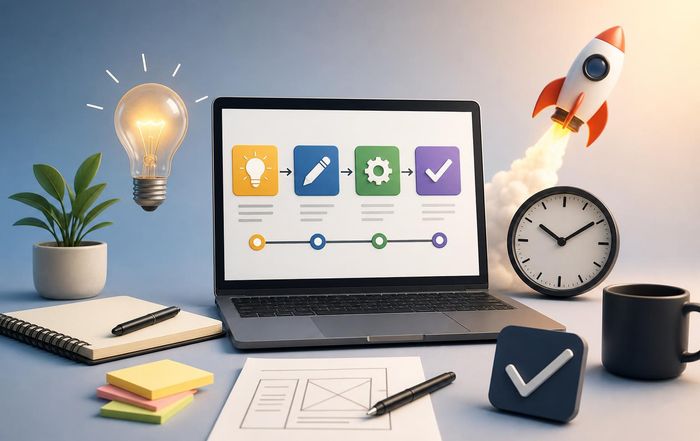
Once objectives are clear, the next step is to translate them into a staged workflow with realistic milestones. In 2026, high-performing creative teams increasingly adopt a hybrid approach that blends agile principles, such as iterative delivery and continuous feedback, with the more linear structures familiar from traditional project management. This staged approach might include discovery and research, concept development, refinement, production, and final delivery, with each stage associated with tangible outputs and decision points. Organizations like Atlassian have documented how agile practices, when adapted thoughtfully, can accelerate creative work without forcing it into rigid software-development molds.
The key advantage of a staged workflow is that it creates natural checkpoints where alignment can be validated, and course corrections can be made before large amounts of time are invested in the wrong direction. For distributed teams in regions such as the Netherlands, Sweden, Japan, and New Zealand, these milestones also provide structure that compensates for time zone differences and asynchronous communication. Creative professionals who document their stages and share them with clients or internal stakeholders position themselves as organized, transparent partners, which in turn builds trust and reduces the likelihood of late-stage surprises. As they refine these systems, many turn to CreateWork's insights on productivity tools and systems to select platforms that integrate naturally into their workflows.
Leveraging Technology and AI Without Losing the Human Edge
The technology landscape for creative work has transformed dramatically, with artificial intelligence, automation, and cloud-based collaboration tools now central to how projects are conceived and executed. Platforms such as Adobe and Figma have integrated AI-assisted features that accelerate tasks like layout exploration, asset generation, and versioning, while AI writing tools support ideation, drafting, and localization for global audiences. At the same time, automation platforms can handle repetitive administrative work, from file organization to status reporting, freeing creative professionals to focus on high-value decisions. For readers of CreateWork, the challenge is not whether to adopt these tools but how to integrate them strategically, a theme explored in depth in the platform's AI and automation section and broader technology coverage.
Industry bodies such as the World Economic Forum and OECD have highlighted how AI will reshape creative industries, emphasizing that the most resilient professionals will be those who combine technical fluency with uniquely human capabilities such as judgment, empathy, and narrative insight. By using AI for drafting, prototyping, or routine editing, creatives can compress early stages of work and generate multiple options rapidly, but final decisions about concept, tone, and brand alignment still rest with human experts. In markets from South Korea and Japan to the United States and the United Kingdom, clients increasingly expect transparency about how AI is used, which means that ethical considerations and quality control processes must be embedded into the workflow rather than treated as afterthoughts.
Building Cross-Border Collaboration and Remote-First Practices
The normalization of remote and hybrid work has transformed creative collaboration into a truly global activity, enabling teams in Europe, Asia, Africa, and the Americas to contribute to the same project in real time or asynchronously. However, this opportunity introduces complexity in coordination, communication, and cultural expectations. Organizations such as GitLab and Doist, known for their remote-first practices, have demonstrated that success in distributed environments depends on deliberate documentation, asynchronous-friendly processes, and clear communication norms. For creative professionals navigating this landscape, CreateWork's dedicated resources on remote work models and freelancer best practices offer frameworks that can be adapted to local regulations and client expectations.
Effective remote-first creative workflows emphasize written communication, shared project dashboards, and accessible repositories of reference materials, ensuring that contributors in different time zones can move work forward without waiting for live meetings. This approach is particularly valuable for agencies and studios serving clients in multiple regions, such as a Canadian firm managing campaigns for clients in France, Singapore, and South Africa. Clear handoff protocols, version control practices, and virtual review rituals reduce friction and minimize the risk of duplicated work or conflicting edits. As remote work continues to evolve, professionals who invest in mastering these practices position themselves strongly in an increasingly borderless employment market.
Financial Discipline and Time-to-Value in Creative Projects
Faster project delivery is not only an operational goal; it is a financial imperative. For freelancers and studios operating in competitive markets across North America, Europe, and Asia-Pacific, the ability to deliver high-quality work quickly directly influences revenue, cash flow, and client retention. Leading financial education organizations such as Investopedia and CFA Institute frequently emphasize the importance of understanding time value and opportunity cost, concepts that apply as much to creative labor as to capital. When projects drag on due to unclear scope, inefficient workflows, or repeated rework, effective hourly rates decline, and the capacity to take on new clients shrinks.
By contrast, well-structured workflows with clear milestones, disciplined feedback cycles, and realistic timelines enable more accurate pricing, better forecasting, and healthier client relationships. Creative professionals who treat their workflow as a financial asset-optimizing it to reduce waste and accelerate value creation-are better positioned to navigate economic cycles and regional market fluctuations. Those seeking to align their operational practices with their financial goals can benefit from CreateWork's resources on finance for independent professionals and broader economy and market trends, which contextualize workflow decisions within larger economic dynamics.
Continuous Upskilling and Process Improvement
Sustainable speed in creative delivery depends not only on tools and processes but also on ongoing skills development. As software platforms evolve, client expectations shift, and new media formats emerge, creative professionals must regularly update their technical capabilities, business acumen, and collaboration skills. Institutions such as Coursera and edX, in partnership with leading universities, have expanded access to specialized courses in design systems, creative coding, project management, and behavioral science, enabling practitioners in countries from Germany and Spain to Thailand and Brazil to access world-class training. However, the most effective professionals do not treat learning as a separate activity; they integrate it into their workflow through deliberate experimentation, peer review, and reflective practice.
Continuous improvement also involves regularly analyzing projects to identify bottlenecks, communication breakdowns, or recurring quality issues. Retrospectives, whether conducted individually or with teams, provide an opportunity to refine templates, adjust stage gates, and update tool stacks. For readers of CreateWork, the platform's focus on upskilling and career development and creative practice offers a structured way to plan learning paths that align with both personal interests and market demand. Over time, this commitment to refinement transforms workflow from a static set of steps into a living system that evolves with the professional and their clients.
Integrating Workflow with Lifestyle and Well-Being
An often overlooked dimension of faster project delivery is the role of personal energy, health, and lifestyle design. Burnout, context switching, and chronic overwork are common in creative industries across major hubs such as New York, London, Berlin, Sydney, and Tokyo, and they represent significant hidden costs for both individuals and organizations. Research from bodies like the World Health Organization and American Psychological Association underscores the impact of stress and poor work-life balance on cognitive performance, creativity, and decision-making. Workflow design that ignores human limits may produce short-term speed but tends to degrade quality and sustainability over time.
By contrast, workflows that incorporate realistic time blocking, focused deep-work sessions, and intentional recovery periods enable creative professionals to maintain high standards while delivering reliably. This might include batching similar tasks, protecting time for uninterrupted strategic thinking, and aligning work rhythms with personal energy patterns. For many in the CreateWork community, the aim is not merely to work faster but to build a life in which creative work supports broader goals around health, relationships, and autonomy. The platform's emphasis on lifestyle design and holistic approaches to work offers a counterbalance to purely productivity-driven narratives, reminding readers that sustainable workflows are those that respect both business needs and human well-being.
How Can We Plan Positioning for the Future of Creative Work?
Well as time unfolds, the convergence of AI, remote collaboration, and shifting economic conditions is reshaping what it means to be an effective creative professional in regions as diverse as Europe, Asia, Africa, and the Americas. Those who succeed will be distinguished not only by their portfolios but by the robustness of their workflows, the clarity of their communication, and the trust they inspire in clients and collaborators. Faster project delivery, in this context, is a by-product of coherent systems that align strategy, tools, talent, and time. Platforms like CreateWork, with its independent knowledge with an integrated focus on business models, technology trends, and the evolving nature of work, serve as companions for professionals who recognize that workflow design is now a central pillar of creative success.
By approaching workflow as a strategic capability, one that blends experience, expertise, creative professionals across the world can build practices that are not only faster but also more resilient, more profitable, and more aligned with the lives they want to lead. In doing so, they transform the pressure for speed into an opportunity for thoughtful redesign, ensuring that the future of creative work remains both human and high-performing.
If you enjoyed that, please subscribe and come back tomorrow, we will be waiting for you x
