
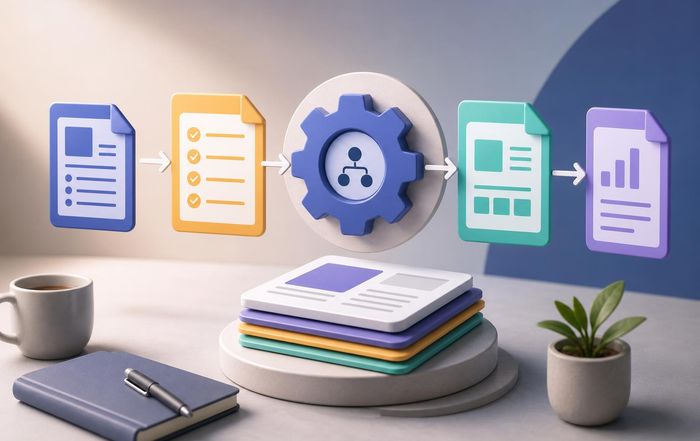
How to Create Repeatable Workflows With Templates
Creating repeatable workflows with templates has become one of the most powerful ways for professionals, teams, and independent creators to scale their impact without sacrificing quality. Across global hubs of innovation from the United States and the United Kingdom to Singapore and Germany, individuals and organizations are discovering that well-designed templates are not just administrative conveniences; they are strategic assets that encode expertise, reduce cognitive load, and make complex work reliably deliverable.
For CreateWork, which serves freelancers, remote workers, founders, and growing businesses around the world, templates sit at the intersection of productivity, technology, and financial sustainability. They allow solo professionals to operate with the consistency of larger organizations, and they enable distributed teams to collaborate as if they were in the same room. As digital work accelerates and AI tools become more capable, those who know how to design and refine repeatable workflows with templates are increasingly positioned to thrive.
This article explores how to build such workflows in a way that is practical, evidence-informed, and adaptable to different industries and regions, while highlighting how the CreateWork ecosystem supports this shift.
Why Repeatable Workflows Matter in Modern Work
Digital work in sectors ranging from software development and design to consulting and education is increasingly complex, multi-step, and collaborative. Research from organizations such as McKinsey & Company and Deloitte has consistently shown that knowledge workers spend a substantial portion of their week on tasks that are routine, manual, or easily standardized, including status reporting, documentation, and basic project coordination. By turning these recurring activities into template-driven workflows, professionals reduce the variability that leads to errors, delays, and miscommunication.
Studies highlighted by Harvard Business Review have found that structured processes and checklists can significantly reduce mistakes in high-stakes environments such as healthcare and aviation, and while creative and freelance work is more fluid, the same principle applies: well-designed templates free cognitive resources for higher-value thinking, creative problem-solving, and client relationships. In remote and hybrid environments, where asynchronous collaboration is the norm, templates also become shared reference points that encode "how we work here" in a transparent, accessible manner.
For freelancers and independent consultants, this consistency directly influences client trust and income stability. Creating standard operating procedures for onboarding, proposals, deliverables, and invoicing can reduce the time between lead generation and payment, which is especially critical for those managing variable cash flow. Resources such as CreateWork's freelancer hub at creatework.com/freelancers emphasize that repeatable workflows are one of the most reliable ways to transform sporadic gigs into a sustainable business.
Understanding Templates as Strategic Assets
Templates are often misunderstood as simple documents or forms. In a more strategic sense, they are reusable structures that capture a proven way of working. They may take the form of project boards, document outlines, email sequences, scripts, or even automated workflows in tools like Notion, Asana, ClickUp, or Trello. When thoughtfully designed, they encode not just steps, but also quality standards, decision criteria, and communication norms.
Leading technology platforms such as Microsoft 365 and Google Workspace have invested heavily in template ecosystems, recognizing that users gain more value when they can start from curated, field-tested structures rather than blank pages. For example, users can explore frameworks for project planning, content calendars, and OKR tracking through resources like Microsoft's support and template galleries or the Google Workspace Learning Center, which offer practical examples of repeatable workflows in action.
For users here, templates become a way to formalize and scale their expertise. A freelance designer in Canada can transform a successful client onboarding process into a standard template, then refine it over time as they expand into Europe or Asia. A remote marketing team in Australia can adapt a launch checklist template to different campaigns while keeping core milestones intact. By treating templates as living assets, professionals build a library of intellectual property that increases both their efficiency and their market value.
Mapping Work Before Building Templates
Before creating templates, it is essential to understand precisely what work is being repeated and which parts truly benefit from standardization. Experts in process design and operations, including those writing for MIT Sloan Management Review, often recommend starting with a simple mapping exercise that outlines the sequence of tasks, the people involved, and the tools used.
Professionals can begin by identifying their most frequent workflows: client onboarding, content production, product development sprints, reporting cycles, or financial reviews. For each workflow, it is useful to document the steps from initial trigger to final outcome, noting where delays, confusion, or rework commonly occur. This process mapping may be done with digital whiteboarding tools such as Miro or FigJam, or with simple diagrams using Lucidchart or similar platforms.
As patterns emerge, it becomes clear which steps can be standardized, which require flexible judgment, and where templates may add the most value. For instance, a remote software team in Germany might discover that every sprint begins with similar planning conversations, yet the artifacts produced vary widely in structure, making later analysis difficult. By capturing a consistent sprint planning template, they can improve both day-to-day work and long-term learning.
On the sections dedicated to guides and frameworks provide foundational approaches for this kind of analysis, helping users break down their work into manageable, repeatable components that can be templated and improved over time.
Designing Effective Templates for Freelancers and Remote Teams
The design phase is where templates move from abstract ideas to practical tools. For freelancers, remote workers, and distributed teams, effective templates share several key characteristics: clarity, adaptability, and alignment with actual workflows rather than idealized ones.
Clarity means that each section or field has a clear purpose, with concise labels and, where necessary, examples or short instructions. For instance, a proposal template used by a consultant in the United Kingdom might include sections for client objectives, scope of work, timeline, and pricing, each accompanied by brief guidance to avoid ambiguity. This reduces the cognitive burden of starting from scratch and ensures that no critical element is overlooked.
Adaptability is equally important, particularly for creative professionals and those operating across multiple countries and cultures. A content calendar template for a marketing agency serving clients in France, Brazil, and Japan must allow for local holidays, language differences, and platform preferences. Rather than rigidly prescribing every detail, the template should provide a strong backbone while leaving room for customization.
Alignment with actual workflows ensures that templates reflect how work is truly done, not how it is imagined. Involving team members in the design process, gathering feedback from early use, and iterating based on real-world constraints are all practices encouraged by organizations like Atlassian, which provides extensive guidance on collaborative work practices through its online resources.
CreateWork's remote work insights at creatework.com/remote-work emphasize that well-designed templates can bridge time zones and cultural differences by making expectations explicit. When everyone from a developer in South Korea to a copywriter in Spain is working from the same shared structures, collaboration becomes smoother and more predictable.
Leveraging AI and Automation to Power Template-Based Workflows
Artificial intelligence and automation tools have dramatically expanded what templates can do, moving beyond static documents into dynamic, responsive systems. Platforms such as Zapier, Make (formerly Integromat), and IFTTT allow professionals to connect templates in one tool with automated actions in others, turning a completed form or task into a trigger for notifications, file creation, or data updates.
Large productivity suites like Notion, ClickUp, and Airtable now integrate AI assistants that can help generate draft content, summarize meeting notes, or suggest task breakdowns based on template structures. For example, a project template for a product launch may include AI-powered fields that automatically generate risk lists or communication plans based on previous projects stored in the system. These capabilities are being continuously updated by vendors, and users can track current features through official product documentation and blogs.
From an employment and skills perspective, organizations such as the World Economic Forum have noted that the ability to work effectively with AI and automation is becoming a core competency across industries, rather than a niche technical skill. By embedding AI into template-based workflows, freelancers and small businesses can approximate the capabilities of much larger operations, especially in areas like drafting, research summarization, and routine reporting.
Within the ecosystem, the focus on AI automation and tools helps users understand how to responsibly integrate these technologies into their workflows. The goal is not to replace human judgment, but to augment it, allowing professionals to spend more time on strategy, creativity, and relationship-building while delegating repetitive tasks to software.
Templates as a Foundation for Business Startups and Scaling
For new ventures and solo founders, templates often make the difference between ad-hoc operations and a business capable of scaling. Early-stage startups in regions from North America to Southeast Asia frequently operate with lean teams and limited resources, making operational discipline crucial. Templates for customer discovery interviews, pitch decks, investor updates, and product roadmaps provide a repeatable scaffolding that supports growth without overwhelming founders.
Entrepreneurship support organizations such as Startup Genome and Y Combinator routinely share structured templates for topics like weekly updates, experiment tracking, and key performance indicators, demonstrating that even high-growth startups rely heavily on repeatable frameworks. By adopting and adapting such templates, founders can avoid reinventing common processes and instead focus on differentiation and innovation.
CreateWork's business startup resources at creatework.com/business-startup and broader business insights align with this approach, encouraging readers to treat templates as part of their operating system. As teams grow and hire across borders, standardized workflows make onboarding faster and reduce the risk that institutional knowledge remains trapped in the heads of a few early employees.
Financial and Productivity Benefits of Template-Driven Work
From a financial perspective, repeatable workflows with templates contribute to both revenue growth and cost control. On the revenue side, they shorten cycle times for proposals, project starts, and deliverables, allowing professionals to serve more clients or complete more projects in the same amount of time. On the cost side, they reduce errors, rework, and time spent on low-value administrative tasks.
Research by organizations such as PwC and Accenture has highlighted that process standardization and automation can lead to significant productivity gains in both large enterprises and small businesses, though the exact figures depend on context and implementation quality. While precise percentages vary across studies and industries, the consistent conclusion is that structured workflows tend to improve throughput and reliability.
For individuals, especially freelancers and remote workers, this translates into more billable hours and less unpaid overhead. A standardized invoicing template integrated into accounting tools like Xero, QuickBooks, or FreshBooks can reduce payment delays and simplify tax preparation. Learning more about managing money as an independent professional through resources like CreateWork's money and finance section or finance-focused content helps connect the dots between workflow design and long-term financial resilience.
Productivity experts and organizations such as Getting Things Done (GTD) and Todoist have long advocated for externalizing structure through checklists, templates, and task lists. By combining these principles with modern digital tools and curated guidance on productivity tools at creatework.com/productivity-tools, professionals can build systems that are both powerful and personally sustainable.
Upskilling and Career Development Through Template Mastery
As automation reshapes labor markets across Europe, Asia, Africa, and the Americas, the ability to design, improve, and manage repeatable workflows is emerging as a valuable career skill. Reports from the OECD, World Bank, and International Labour Organization have emphasized that workers who can combine domain expertise with process thinking and digital tool fluency are better positioned in a changing economy.
For employees, contributing to the creation or refinement of team templates can be a visible way to demonstrate leadership and initiative, even without formal management authority. Documenting a new onboarding template, improving a project reporting format, or designing a reusable research framework can all signal that an individual understands both the work and the systems that support it.
Freelancers and consultants can turn their best templates into products or service differentiators. Some professionals sell template packs for project management, marketing funnels, or creative workflows on platforms like Gumroad or Etsy, while others use proprietary templates as part of their consulting value proposition. In both cases, templates become a tangible expression of expertise.
CreateWork's upskilling content at creatework.com/upskilling encourages readers to view template mastery as part of a broader portfolio of future-ready skills, alongside data literacy, communication, and cross-cultural collaboration. By continuously refining their workflows and sharing knowledge with peers, professionals contribute to a culture of learning that benefits entire organizations and communities.
Templates, Creativity, and Human-Centered Work
A common concern among creative professionals is that templates might stifle originality or reduce work to formulaic outputs. However, research and practice in fields such as design, music, and writing suggest that constraints, when thoughtfully applied, can actually enhance creativity by providing structure within which experimentation can occur. The work of organizations like IDEO and insights from design thinking methodologies illustrate how frameworks and templates can guide innovation rather than limiting it.
For example, a creative brief template used by an agency in Italy or South Africa does not dictate the final design; instead, it ensures that the designer receives all relevant information about the client's goals, audience, and brand, reducing the risk of misalignment and enabling more focused creative exploration. Similarly, a storytelling template for video production can help teams in Brazil or Thailand maintain narrative coherence while still leaving room for unique visual and emotional expression.
On the creative hub at creatework.com/creative, the emphasis is on harnessing templates as launchpads rather than cages. By offloading repetitive structural decisions to well-tested frameworks, writers, designers, and makers can devote more of their energy to the aspects of their craft that truly require human imagination and taste.
Building a Template-First Culture in Organizations
For organizations aiming to fully realize the benefits of repeatable workflows, it is helpful to cultivate a culture that values documentation, shared standards, and continuous improvement. This does not mean imposing rigid rules in all situations; rather, it involves recognizing when standardization enhances quality and when flexibility is necessary.
Leaders in technology and professional services firms, including companies profiled by Forbes and Inc., often encourage teams to maintain shared repositories of templates, checklists, and standard operating procedures in tools like Confluence, Notion, or SharePoint. These repositories become living knowledge bases, updated as teams learn from new projects and changing market conditions.
To avoid stagnation, organizations can establish periodic reviews of key templates, inviting feedback from users in different regions and roles. A project kickoff template used in the United States might be adapted based on insights from colleagues in the Netherlands or Japan, ensuring cultural relevance and regulatory compliance. Involving diverse voices in these reviews also helps prevent templates from encoding outdated assumptions or biases.
The broader economic context, as tracked by institutions such as the International Monetary Fund and the European Commission, suggests that organizations able to adapt quickly while maintaining operational discipline are more resilient in the face of shocks. By grounding adaptability in well-structured, template-based workflows, businesses create a stable core from which to experiment and innovate. The economy-focused content at creatework.com/economy explores how such operational strength contributes to long-term competitiveness.
Integrating Templates Into Everyday Life and Work Routines
While templates are often discussed in a business context, they also have a place in personal productivity and lifestyle design. Individuals juggling remote work, family responsibilities, and ongoing learning can benefit from routines and checklists that reduce decision fatigue and ensure that important tasks are not overlooked. Resources from organizations like MindTools and The Mayo Clinic highlight the value of structured routines for stress reduction and mental health, even though specific templates may vary by person and culture.
Daily planning templates, weekly review checklists, and goal-setting frameworks can help professionals in Finland, Singapore, or New Zealand maintain clarity and focus amid rapidly changing demands. For digital nomads and remote workers who frequently shift time zones, travel preparation templates and workday rituals can provide continuity and stability.
CreateWork's lifestyle content at creatework.com/lifestyle connects these personal systems to broader themes of well-being and sustainable success. By viewing templates not as rigid prescriptions but as supportive scaffolding, individuals can craft lives that are both productive and aligned with their values.
Moving Forward with Template-Based Workflows
In an era where work is increasingly global, digital, and augmented by AI, the ability to create and refine repeatable workflows with templates is becoming foundational for success. Freelancers, remote teams, and growing businesses across continents are discovering that templates do far more than save time; they encode hard-won experience, reduce uncertainty, and make complex collaboration possible at scale.
For active followers of CreateWork, the path forward involves a blend of reflection and experimentation: mapping existing workflows, identifying opportunities for standardization, designing and testing templates, and integrating automation where it adds genuine value. As tools evolve and best practices spread through trusted sources such as Harvard Business Review, McKinsey, and leading technology platforms, the core principle remains consistent: structure enables freedom.
By treating templates as living assets and engaging with resources across CreateWork's technology, employment, and broader CreateWork knowledge base, professionals can build systems that honor both efficiency and humanity. In doing so, they contribute to a world of work that is more predictable where it should be, more creative where it can be, and more sustainable for people and organizations everywhere.
