
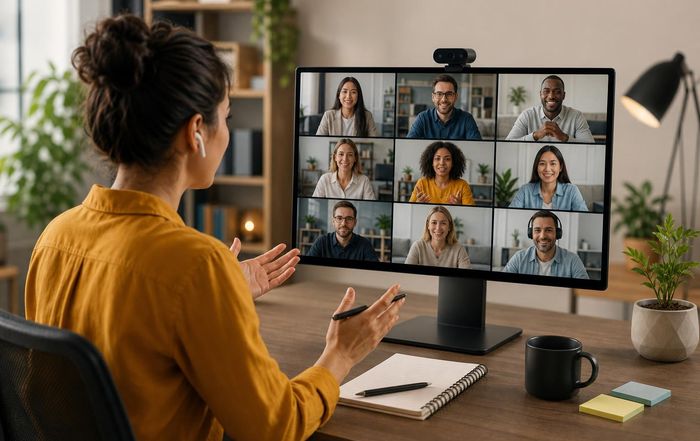
How to Run Effective Virtual Meetings: A Practical Guide for Modern Work
Virtual meetings have moved from a niche practice to the backbone of how teams collaborate, sell, learn, and build relationships across borders. For freelancers, remote teams, and founders growing distributed companies, the quality of virtual meetings now directly shapes productivity, client satisfaction, and even long-term career prospects. On CreateWork, where independent professionals and organizations come together to build flexible, modern careers, understanding how to run effective virtual meetings is not a "nice to have" skill; it is core infrastructure for success.
In recent years, platforms such as Zoom, Microsoft Teams, Google Meet, and Slack have rapidly evolved, adding AI-powered features, deeper integrations, and more sophisticated security and collaboration tools. At the same time, research from organizations like Harvard Business Review, McKinsey & Company, and Gallup has offered increasingly detailed insight into what makes remote and hybrid collaboration genuinely effective rather than draining. This article synthesizes those developments into a practical, experience-driven guide that helps freelancers, remote workers, and business leaders design virtual meetings that are focused, human, and high impact.
Why Virtual Meetings Fail - And Why They Matter More Than Ever
Many professionals across North America, Europe, and Asia report that virtual meetings often feel longer, more tiring, and less productive than in-person sessions. Studies from Stanford University on "Zoom fatigue" highlight how constant eye contact, limited non-verbal cues, and cognitive overload can increase exhaustion. Reports from Microsoft's Work Trend Index similarly show that unstructured, back-to-back virtual meetings reduce focus and increase burnout.
Yet, virtual meetings remain indispensable. Distributed teams rely on them to align across time zones, freelancers use them to win and retain clients, and startups use them to access global talent without the cost of physical offices. For readers of CreateWork, who often operate in flexible or fully remote setups, the challenge is not to avoid virtual meetings but to transform them into efficient, energizing sessions that move work forward.
The most effective virtual meetings share several characteristics: clear purpose, intentional design, thoughtful use of technology, inclusive facilitation, and a strong link to outcomes and follow-up. These principles apply whether one is running a client discovery call from Berlin, a sprint planning session from Singapore, or a creative workshop from São Paulo.
For those building sustainable remote careers and businesses, exploring broader remote work strategies on CreateWork's remote work insights can provide valuable context that complements this meeting-focused guide.
Clarifying Purpose: When a Meeting Is (and Is Not) the Right Tool
Effective virtual meetings begin before anyone clicks "Join." The most experienced remote leaders treat a meeting as one tool among many, not the default option. Research from Atlassian and Slack has consistently shown that a significant portion of meetings could be replaced by asynchronous communication without loss of quality.
Before scheduling, it is useful to ask a few focused questions: Is the goal to inform, to decide, to brainstorm, to build relationships, or to coordinate execution? Could this be achieved more efficiently via a shared document, a project management tool, or an asynchronous video update? If the answer is yes, then the most productive meeting is the one that never happens.
When a meeting is necessary, defining its primary objective in a single sentence helps align expectations and reduce drift. For instance, "By the end of this meeting, the team will decide on the Q4 feature priorities" or "The goal is to finalize the client's scope and timeline for the new campaign." This clarity not only shapes the agenda but also determines who truly needs to attend and how long the session should last.
Professionals who are building independent careers can connect this discipline to broader business strategy and client management; resources such as CreateWork's business guide for independents explore how intentional communication supports long-term client trust and profitability.
Designing an Agenda That Works in a Virtual Environment
In a virtual setting, the agenda is more than a list of topics; it is a shared contract. It should be concise, time-bound, and visible to all participants before and during the meeting. Studies from Harvard Business School suggest that meetings with a structured agenda are perceived as more effective, fair, and engaging, particularly in diverse, distributed teams.
An effective virtual meeting agenda typically includes the meeting objective, key topics with time estimates, the decision or outcome needed for each topic, and the person responsible for leading that segment. For global teams spanning Europe, North America, and Asia, including time zones and clear start and end times reduces confusion and late arrivals.
Sharing the agenda at least a day in advance allows participants to prepare, reflect, and add questions. This is especially valuable for introverts and for participants from cultures that value preparation over spontaneous debate. Tools such as Notion, Confluence, or a shared Google Doc make it easy to collect pre-meeting input and comments.
Freelancers working with multiple clients can standardize agenda templates to reduce cognitive load and present a professional, consistent experience. Those interested in optimizing their workflows further can explore CreateWork's productivity tools guidance, which covers systems and software that complement well-designed meetings.
Choosing and Mastering the Right Technology
The technology stack used for virtual meetings has expanded significantly. In addition to mainstream platforms like Zoom (zoom.us), Microsoft Teams (microsoft.com/microsoft-teams), and Google Meet (workspace.google.com), many teams now integrate collaborative whiteboards such as Miro (miro.com) or Mural (mural.co), project tools like Asana (asana.com) or Trello (trello.com), and note-taking platforms such as Evernote or Obsidian.
In addition, AI-powered meeting assistants have become mainstream. Tools like Otter.ai (otter.ai) and Fathom can transcribe conversations, highlight action items, and summarize discussions, while Notion AI and Microsoft Copilot can help convert raw notes into structured documentation. When used thoughtfully, these tools free participants to focus on the conversation rather than on manual note-taking.
However, effective use of technology requires intentionality. Participants need clear guidance on which tools will be used, how to access them, and what is expected. It is wise to minimize tool-switching during a call, as cognitive science research and reports from APA (American Psychological Association) show that frequent context switching reduces attention and recall.
Security and privacy are also key considerations, particularly for freelancers handling client-sensitive information and companies working across jurisdictions with regulations like GDPR. Platforms such as Zoom, Teams, and Webex provide documentation on encryption, data handling, and compliance, which can be reviewed via their respective security pages. Organizations should align meeting practices with their broader technology strategy and legal obligations, ensuring that recordings, transcripts, and shared files are stored and shared appropriately.
Structuring the Meeting for Focus and Inclusion
Once a meeting begins, structure and facilitation play a critical role in determining outcomes. Experienced virtual facilitators often open with a brief check-in or context-setting round, which not only humanizes the session but also surfaces expectations and potential blockers early. In cross-cultural or cross-functional teams, this can help create psychological safety, which Google's Project Aristotle identified as a key driver of team effectiveness.
Clear ground rules support focus: keeping cameras on when bandwidth allows, muting when not speaking, raising hands or using reaction icons to manage turn-taking, and avoiding multitasking. While some research, including studies cited by MIT Sloan Management Review, suggests that forced camera-on policies can increase fatigue and stress, especially in home environments without private space, many teams have found that a balanced approach works best. For example, requesting cameras on during introductions, key decisions, or high-stakes discussions, while allowing flexibility during long presentations or late-night calls for participants in distant time zones.
Facilitators should be particularly attentive to inclusion. Research from LeanIn.Org and McKinsey highlights that women and underrepresented professionals are more likely to be interrupted or overlooked in meetings. Virtual environments can amplify these dynamics if not managed carefully. Techniques such as round-robin sharing, inviting input from quieter participants, and explicitly pausing to ask, "Whose perspective have we not heard?" help ensure that decisions benefit from the full range of expertise present.
Freelancers and independent consultants leading client sessions can apply these same practices to demonstrate professionalism and build trust. For those looking to refine their overall client communication and financial strategies, CreateWork's money and finance resources and finance insights provide additional guidance on building sustainable, client-centered practices.
Using AI and Automation to Enhance Meetings, Not Overwhelm Them
AI automation has become a central theme in modern knowledge work, and virtual meetings are no exception. Many platforms now offer features such as automatic transcription, live translation, meeting summarization, and smart follow-up suggestions. These capabilities can dramatically reduce administrative workload and support accessibility, particularly for participants who are non-native speakers or have hearing impairments.
However, the most effective use of AI in meetings is guided by clear intent. Rather than enabling every possible feature, experienced teams select a few high-impact automations and integrate them into their workflows. For example, using an AI assistant to generate a concise summary and action list immediately after a call, which is then reviewed and edited by a human before distribution, combines efficiency with accuracy and accountability.
It is also important to transparently inform participants when AI tools are recording, transcribing, or analyzing the conversation, both for ethical reasons and to comply with legal requirements in various countries. Many organizations now include AI use in their meeting norms or policies.
Readers who wish to systematically incorporate automation into their work can explore CreateWork's AI and automation hub, which covers not only meeting tools but also broader workflows for freelancers, remote teams, and startup founders.
Time Zones, Cultures, and the Global Nature of Virtual Work
Virtual meetings have made it normal for professionals in the United States, the United Kingdom, Germany, India, Singapore, and Australia to collaborate in real time. Yet, this global reach introduces scheduling, cultural, and communication challenges that require thoughtful design.
Time zone equity is a recurring concern. Rotating meeting times so that the burden of early mornings or late nights is shared fairly across regions demonstrates respect and supports retention. Tools such as World Time Buddy (worldtimebuddy.com) or Every Time Zone (everytimezone.com) help visualize overlaps. For recurring meetings that involve participants from North America, Europe, and Asia-Pacific, some teams adopt a pattern where each major region occasionally receives the more convenient slot.
Cultural norms also influence how people speak up, disagree, and interpret silence. Resources from Erin Meyer's work at INSEAD, particularly "The Culture Map," and research from Hofstede Insights illustrate how high-context vs. low-context communication styles, directness, and attitudes toward hierarchy vary across countries. Skilled facilitators adapt by asking more open questions, using written chat for anonymous input when appropriate, and clarifying that constructive disagreement is welcome.
Virtual meeting leaders who invest in cultural awareness and global collaboration skills often find that these capabilities translate into stronger client relationships and better business outcomes. Those building international careers or companies can connect this to broader topics in CreateWork's economy and employment coverage and employment insights, which explore how global trends are reshaping work opportunities.
Driving Decisions, Actions, and Accountability
The ultimate measure of a virtual meeting's effectiveness is not how smooth the call felt but what happens afterward. Clear decisions, documented actions, and shared understanding are the foundation of accountability.
Experienced leaders often designate a "decision owner" and a "note owner" before or at the beginning of the meeting. While AI can assist with transcription and draft summaries, a human still needs to confirm which decisions were actually made, who is responsible for each action item, and what the deadlines are. A brief closing recap, where the facilitator restates key decisions and responsibilities and checks for alignment, significantly reduces misunderstandings.
For project-driven work, linking meeting outcomes directly into task management systems such as Jira, Asana, or ClickUp ensures that commitments do not remain buried in a transcript. Many tools now integrate with meeting platforms, allowing participants to create tasks in real time.
Independent professionals, especially those juggling multiple clients and projects, benefit greatly from disciplined follow-up. A concise, well-structured follow-up email or shared document not only reinforces clarity but also signals reliability and professionalism. Guidance on building these habits as part of a broader independent career system can be found in CreateWork's freelancer resources and comprehensive work guide, which emphasize practical systems for consistent delivery.
Supporting Well-Being and Sustainable Performance in a Video-Heavy World
As virtual meetings have multiplied, concerns about burnout and mental health have grown. Studies from Stanford's Virtual Human Interaction Lab and reports from the World Health Organization indicate that excessive screen time, lack of breaks, and blurred boundaries between work and home can negatively impact well-being.
Organizations and individuals are responding with more intentional meeting hygiene. Common practices include adopting "no meeting" blocks during deep work times, scheduling 25- or 50-minute meetings instead of full half-hours or hours to create buffer time, and encouraging walking meetings or audio-only check-ins for certain types of conversations. Some teams also conduct periodic "meeting audits" to identify recurring sessions that no longer serve a clear purpose.
Freelancers and remote workers, who often lack the structural boundaries of office life, need to be especially proactive. Establishing personal rules about maximum daily meeting hours, grouping calls into specific time windows, and integrating recovery activities such as exercise or outdoor time between sessions can significantly improve long-term performance.
These well-being strategies connect naturally with broader lifestyle design and career sustainability topics, which are explored in depth in CreateWork's lifestyle content. Building a thriving independent or remote career is not only about productivity but also about designing a life that is healthy and fulfilling.
Upskilling: Turning Virtual Meeting Mastery into a Career Advantage
As organizations across Europe, North America, Asia, and beyond continue to rely on distributed collaboration, professionals who can design and lead effective virtual meetings gain a tangible competitive edge. This is true for project managers, startup founders, consultants, creative directors, and technical leads alike.
Upskilling in this area involves both soft and hard skills. On the soft side, facilitation, active listening, conflict resolution, and cross-cultural communication are critical. On the hard side, familiarity with leading collaboration platforms, comfort with AI tools, and the ability to troubleshoot common technical issues are increasingly expected.
A variety of respected institutions and platforms offer training and certifications relevant to virtual collaboration and facilitation. Coursera (coursera.org), edX (edx.org), and LinkedIn Learning (linkedin.com/learning) host courses on remote leadership, digital collaboration, and online facilitation skills, many of which draw on research from universities such as University of London, University of Michigan, and Duke University.
For independent professionals and employees alike, integrating these skills into a broader development plan is essential. Online, resources such as upskilling and learning pathways and business startup guidance help readers connect meeting mastery with entrepreneurial growth, career mobility, and long-term financial resilience.
The Growing Role of Virtual Meetings in the Future of Work
The evolution of virtual meetings reflects broader shifts in how work is organized. Hybrid and fully remote models are now firmly established in many sectors, from software development and digital marketing to consulting, finance, and creative industries. As AI continues to automate routine tasks, human collaboration, judgment, and creativity become even more central, and well-run virtual meetings are one of the primary arenas where these strengths are expressed.
In this environment, professionals and organizations that treat virtual meetings as strategic assets rather than unavoidable obligations will stand out. They will design interactions that respect people's time, leverage technology intelligently, foster inclusion across borders and backgrounds, and convert conversation into concrete value. They will also view continuous improvement as part of the process, regularly asking what can be streamlined, automated, or redesigned to serve participants better.
For the community which spans freelancers, remote employees, founders, and creative professionals across the globe, virtual meetings are not only a tool of coordination but also a stage for demonstrating expertise, building trust, and shaping opportunity. Whether negotiating a contract with a client in London, leading a design critique with a team in Tokyo, or pitching investors in New York from a home office in Cape Town, the ability to run effective virtual meetings can open doors that geography once kept closed.
As work continues to evolve, those who combine strong meeting skills with sound business acumen, technological fluency, and financial literacy will be best positioned to thrive. Exploring the broader ecosystem of insights on CreateWork's main hub can help readers connect these threads into a coherent, resilient strategy for the future of their work and lives.
