
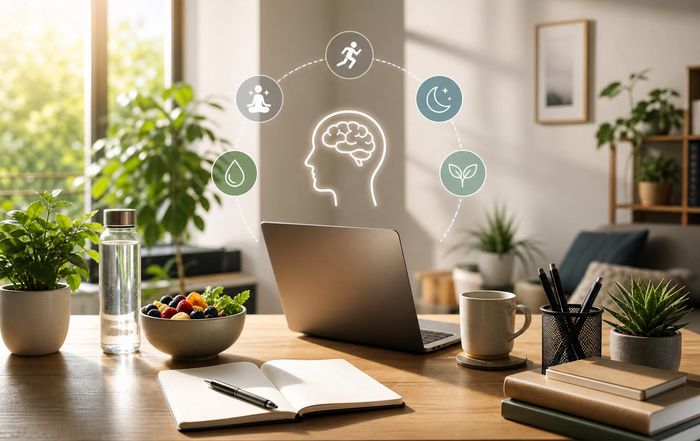
Simple Lifestyle Changes That Improve Work Performance
In a world where work is increasingly distributed, digital, and fast-moving, the small choices people make each day often determine whether they feel overwhelmed or energized, distracted or focused, stuck or steadily progressing. For the awesome community of freelancers, remote professionals, founders, and creators who turn to CreateWork for guidance, the question is no longer whether lifestyle influences performance, but how to intentionally design daily habits that support deep work, sustainable productivity, and long-term wellbeing.
This article explores practical, evidence-based lifestyle changes that can significantly improve work performance for people across regions such as North America, Europe, Asia, Africa, and beyond, from solo freelancers working from home in Berlin or São Paulo to remote teams collaborating across New York, London, Singapore, and Sydney. Drawing on research from respected institutions and the lived experience of modern workers, it focuses on simple, realistic shifts that compound over time rather than radical overhauls that rarely last.
Rethinking Performance: From Hustle to Sustainable Output
For many years, professional success was often equated with long hours, constant availability, and an always-on hustle mentality. Yet research from organizations such as Harvard Business Review and World Health Organization increasingly shows that chronic overwork and stress erode cognitive performance, creativity, and decision-making, while also increasing the risk of burnout and health problems. In parallel, the rapid rise of remote and hybrid work, documented by sources including OECD and McKinsey & Company, has shifted attention from time spent at a desk to tangible outcomes and results.
For independent professionals and teams featured on platforms like CreateWork, sustainable performance has become a core strategic asset. Those who learn to manage their energy, attention, and wellbeing can deliver consistent value, take on higher-quality projects, and maintain the flexibility that initially drew many to freelancing or remote work. In this context, lifestyle is not an afterthought; it is a core part of professional infrastructure, just as important as a reliable laptop or stable internet connection.
Skilled readers who are exploring new ways of working can find further context on evolving work models in CreateWork's remote work insights, which examine how location-independent careers are reshaping expectations across industries.
Sleep: The Hidden Engine of Cognitive Performance
Among all lifestyle factors, sleep remains one of the most powerful yet frequently underestimated drivers of work performance. Research from National Institutes of Health and Sleep Foundation consistently shows that sufficient, high-quality sleep improves memory, focus, problem-solving, and emotional regulation. Conversely, even moderate sleep deprivation impairs reaction time and decision-making to a degree comparable with alcohol consumption.
For freelancers and remote workers whose schedules are often self-directed, sleep can easily become irregular, especially when juggling clients across time zones in the United States, Europe, and Asia. However, simple adjustments can create a powerful foundation for better work:
Maintaining a consistent sleep-wake schedule, even on weekends, helps stabilize the body's circadian rhythm, making it easier to fall asleep and wake up without an alarm. Limiting exposure to bright screens in the hour before bed, and dimming lights in the evening, supports the natural release of melatonin, a hormone that signals the brain to prepare for sleep. Creating a wind-down routine-such as reading, stretching, or journaling-teaches the brain to associate certain cues with rest, reducing the temptation to keep working late into the night.
Workers who have shifted to healthier sleep patterns often report that tasks which previously felt exhausting become manageable, and that complex work requiring concentration, such as coding, design, or strategic planning, feels less mentally draining. Those interested in building broader systems around personal energy and time can explore the updated sections like CreateWork's productivity tools guidance to integrate sleep-friendly scheduling into their digital workflows.
Movement and Micro-Exercise: Protecting Body and Brain
Modern knowledge work, especially in remote roles, is dominated by long hours of sitting. Studies summarized by organizations such as World Economic Forum and Mayo Clinic link prolonged sedentary time to reduced metabolic health, increased risk of chronic disease, and lower subjective wellbeing. Yet the solution is not limited to intense gym sessions; frequent, light movement throughout the day can significantly improve both physical and cognitive performance.
Short movement breaks-such as standing up every 30-60 minutes, walking while taking calls, or stretching between tasks-help increase blood flow, reduce muscle tension, and refresh attention. Research from American College of Sports Medicine suggests that even brief bouts of activity can improve mood and executive function, which are crucial for planning, prioritization, and problem-solving.
For freelancers and entrepreneurs who set their own hours, integrating micro-exercise into the workday is often more practical than scheduling long workouts. A remote developer in Toronto might walk around the block between sprints of focused coding, while a marketing consultant in Madrid could use a standing desk for part of the day and perform simple mobility exercises during video call breaks. Over time, these habits help prevent the stiffness, fatigue, and mental fog that often accumulate during long projects.
Those building new ventures or independent careers can find complementary strategies for structuring their days in CreateWork's business startup resources, which emphasize sustainable routines rather than unsustainable bursts of effort.
Nutrition and Hydration: Fuel for Focus and Stability
Nutrition is another area where small, consistent decisions can yield meaningful improvements in work performance. Research compiled by Harvard T.H. Chan School of Public Health and European Food Information Council indicates that diets rich in whole grains, vegetables, fruits, lean proteins, and healthy fats support stable energy levels and cognitive function, whereas frequent consumption of ultra-processed foods, high sugar, and excessive caffeine can lead to energy crashes, mood swings, and impaired concentration.
For remote workers and freelancers, the proximity of the kitchen can be both an advantage and a challenge. On the positive side, it becomes easier to prepare balanced meals and snacks rather than relying on fast food near an office. However, unstructured days and stress can also lead to irregular eating patterns or constant grazing. Simple, practical changes often work best: planning meals in advance, keeping nutrient-dense snacks such as nuts or fruit within reach, and scheduling regular meal breaks away from screens.
Hydration also plays a crucial role. Even mild dehydration has been linked in studies cited by National Library of Medicine to reduced alertness and short-term memory. Keeping water on the desk, setting gentle reminders, or pairing drinking water with routine events such as starting a new task can help maintain adequate fluid intake throughout the workday.
Professionals seeking to align their financial decisions with healthier lifestyle choices may find it useful to explore CreateWork's money and finance perspectives, which address how budgeting for quality food and wellness can be seen as an investment in long-term earning capacity rather than an optional luxury.
The Science of Breaks: Rest as a Performance Tool
In many corporate cultures, particularly in competitive hubs like New York, London, and Hong Kong, taking breaks has historically been viewed with suspicion, as if continuous work were the most productive approach. Yet cognitive science suggests the opposite. Research discussed by American Psychological Association and Microsoft WorkLab shows that regular, intentional breaks reduce mental fatigue, support creativity, and prevent decision overload.
Short breaks-ranging from a few minutes to a quarter of an hour-allow the brain's default mode network to activate, which is associated with insight, reflection, and consolidation of information. For creative professionals, such as designers, writers, and developers who frequently use CreateWork's creative resources, stepping away from the screen can unlock solutions that remained elusive during intense focus.
Simple strategies might include using a timer to alternate between focused work and short rests, changing physical posture during breaks, or briefly engaging in an enjoyable, unrelated activity such as listening to music or stepping outdoors. Longer breaks, such as a dedicated lunch period without work discussions, help reset attention for the afternoon and reduce the risk of productivity slumps.
Over time, professionals who treat breaks as a deliberate tool rather than a guilty indulgence often find that they accomplish more in fewer hours, with higher quality and less stress.
Digital Boundaries and the Remote-Work Lifestyle
The global expansion of remote work, accelerated earlier this decade and still evolving, has given millions of professionals unprecedented flexibility. However, it has also blurred the boundaries between work and personal life, especially in time-zone-spanning collaborations between regions such as the United States and Europe or Asia and Australia. Reports from International Labour Organization and Pew Research Center indicate that many remote workers struggle with longer working hours, difficulty unplugging, and a sense of being constantly "on call."
Establishing clear digital boundaries is a simple yet powerful lifestyle change that can protect both performance and mental health. Practical measures include defining specific work hours and communicating them to clients or colleagues, turning off non-essential notifications outside those hours, and physically separating work and leisure devices where possible. Some professionals use separate user profiles or apps to differentiate between deep work and reactive communication.
For freelancers who manage multiple clients across continents, these boundaries are essential to prevent burnout. Transparent communication about availability, response times, and project timelines not only protects the individual but also builds trust, as clients know when to expect updates and when the freelancer is offline. Readers seeking structured advice on managing remote careers can explore CreateWork's dedicated remote work guidance, which addresses time-zone management, asynchronous collaboration, and communication norms.
By treating connectivity as a tool to be consciously managed rather than a force that dictates every waking hour, professionals regain control of their attention and are better able to deliver thoughtful, high-value work.
Harnessing AI and Automation Without Losing the Human Edge
The rapid growth of artificial intelligence and automation technologies has reshaped how work is done across industries in North America, Europe, Asia, and beyond. Tools for writing assistance, code generation, customer service, and workflow automation are now widely accessible, as documented by sources such as Stanford HAI and MIT Technology Review. For freelancers and small businesses, these tools can dramatically increase efficiency, but they also raise questions about how to maintain a human, creative edge.
A key lifestyle shift involves reframing AI and automation as partners that handle routine, repetitive tasks, freeing humans to focus on higher-order thinking, relationship building, and creative problem-solving. Instead of attempting to do everything manually, professionals can delegate scheduling, basic research, or initial draft generation to tools, then invest their time in refining ideas, understanding client needs, and developing strategy.
This approach requires a mindset of continuous learning, as tools evolve quickly and new capabilities emerge regularly. Yet it also supports healthier work patterns by reducing cognitive overload and allowing individuals to concentrate on the aspects of work that are most meaningful and uniquely human. Readers who want to explore this intersection of technology and lifestyle can consult CreateWork's AI and automation insights, which emphasize practical use cases and ethical considerations rather than hype.
External resources such as OpenAI and Partnership on AI provide additional context on responsible AI use, helping professionals navigate both the opportunities and limitations of these tools.
Building Focus Through Simple Environmental Changes
The physical and digital environment in which work takes place exerts a strong influence on performance, especially for remote workers whose homes double as offices. Research from University of Exeter and ergonomics experts cited by Occupational Safety and Health Administration suggests that relatively small adjustments can improve comfort, reduce distraction, and support sustained focus.
For those without a dedicated office, even a modest, consistent workspace-such as a particular corner of a room-can help signal to the brain that it is time to work. Good lighting, an ergonomic chair, and a monitor at eye level reduce physical strain, while minimizing visual clutter helps reduce cognitive load. Noise management is also crucial; some professionals benefit from quiet, others from background sounds or music, and many find that noise-canceling headphones or soft ambient soundtracks create a more stable focus environment.
Digital environments matter as well. Organizing files, minimizing unnecessary desktop icons, and using tools that support distraction-free writing or coding can make it easier to enter and maintain flow states. Those interested in integrating technology more intentionally into their workspace can explore CreateWork's technology guidance, which highlights tools that simplify rather than complicate digital life.
By consciously shaping their surroundings, professionals create conditions in which concentration becomes the default rather than a constant struggle against interruptions and discomfort.
Financial Stability as a Foundation for Mental Clarity
While lifestyle discussions often focus on sleep, nutrition, and exercise, financial wellbeing is equally important for sustained work performance. Persistent money stress can impair concentration, increase anxiety, and make long-term planning more difficult, as noted in analyses by World Bank and OECD. For freelancers and independent workers whose income may fluctuate, this stress can be particularly acute.
Simple financial practices can significantly reduce this pressure. Creating a basic budget that accounts for both business and personal expenses, setting aside a portion of income for taxes and savings, and establishing a modest emergency fund help transform uncertainty into manageable risk. Separating personal and business accounts can provide clearer insight into profitability and reduce confusion during tax season.
Professionals who build these habits often report that they feel more confident accepting or declining projects, investing in tools or training, and planning for future goals. This clarity, in turn, supports better decision-making and reduces the mental bandwidth consumed by constant financial worry. Those seeking structured guidance can refer to CreateWork's finance and money resources and business insights, which are tailored to the realities of independent and small-business work.
External organizations such as Financial Conduct Authority in the UK and Consumer Financial Protection Bureau in the US also provide educational materials that can help workers in different regions navigate financial planning, credit, and consumer rights.
Continuous Learning and Upskilling as a Lifestyle Choice
In an era where technology, markets, and client expectations evolve rapidly, ongoing learning has shifted from an occasional activity to a core lifestyle component for high-performing professionals. Reports from World Economic Forum and UNESCO emphasize that upskilling and reskilling are essential not only for career advancement but also for resilience in the face of economic shifts and automation.
Rather than treating learning as a separate, once-a-year event, many successful freelancers and remote workers integrate it into their weekly routines. This might involve dedicating a few hours each week to online courses, reading industry reports, experimenting with new tools, or practicing emerging skills such as data literacy, digital marketing, or cross-cultural communication. Micro-learning formats, including short videos and interactive modules, make it easier to fit education into busy schedules.
For those who rely on CreateWork as a trusted guide, upskilling resources and the broader guide section offer curated pathways that connect learning directly to practical outcomes, such as higher-value projects, more efficient workflows, or new service offerings. External platforms like Coursera and edX provide additional opportunities to learn from universities and organizations around the world.
By making learning a regular habit rather than an occasional reaction to change, professionals cultivate a mindset of adaptability and curiosity that supports both performance and long-term career satisfaction.
Social Connection, Purpose, and the Human Side of Work
Finally, work performance is deeply influenced by factors that are less tangible than sleep or software, but no less important: social connection and a sense of purpose. Studies referenced by Gallup and Greater Good Science Center at UC Berkeley highlight that people who feel connected to others and aligned with meaningful goals report higher engagement, better health, and greater resilience.
Remote and freelance workers can be particularly vulnerable to isolation, whether they are based in large cities like Tokyo or smaller towns in Scandinavia or South Africa. Simple lifestyle changes-such as participating in online communities, joining co-working spaces, attending local meetups, or scheduling regular video calls with peers-help restore the social fabric that traditional offices once provided. For many, connecting with other professionals through platforms like CreateWork offers both practical support and a sense of belonging.
Equally important is clarifying personal values and aligning work with them where possible. Some find purpose in contributing to sustainable business practices, others in supporting small clients, mentoring newcomers, or creating products that improve daily life. Reflective practices, such as journaling or periodic reviews of goals, can help ensure that daily tasks connect to a broader narrative, which in turn sustains motivation during challenging periods.
Those interested in integrating wellbeing, meaning, and lifestyle design can explore CreateWork's lifestyle perspectives, which examine how careers, habits, and values intersect in different cultures and regions.
Integrating Lifestyle Changes into the CreateWork Journey
Across continents and professions, the core insight remains consistent: simple lifestyle changes, applied consistently, can transform work performance more reliably than any single app, hack, or short-term push. Better sleep, regular movement, nourishing food, intentional breaks, digital boundaries, thoughtful use of AI, supportive environments, financial stability, continuous learning, and meaningful connections form an interconnected system that supports sustainable success.
For the wild and creative community that turns to CreateWork-from freelancers in the United States and Europe to remote teams in Asia-Pacific and entrepreneurs in Africa and South America-these changes are not abstract ideals. They are practical levers that can be pulled today, within the constraints of real lives and real responsibilities. The most effective approach is often to begin with one or two small adjustments, observe their impact, and build from there.
As work continues to evolve through the middle of this decade, those who treat lifestyle as a strategic component of their professional toolkit will be best positioned to thrive. By combining evidence-based habits with the flexible, opportunity-rich world of remote and independent work that CreateWork champions, individuals can craft careers that are not only productive and financially sustainable, but also healthy, meaningful, and deeply human.
