
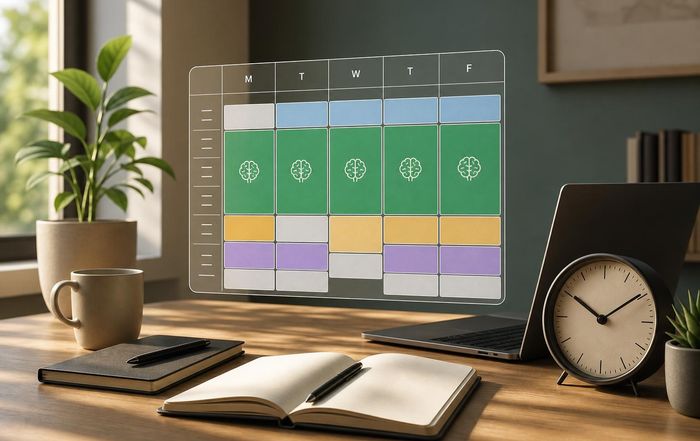
How to Use Calendar Blocking for Deep Work
Deep work has shifted from a niche productivity idea to a core professional capability for freelancers, remote teams, founders, and knowledge workers across the world. In an economy increasingly shaped by automation, artificial intelligence, and global competition, the ability to concentrate without distraction on cognitively demanding tasks has become a decisive advantage. Calendar blocking, when practiced thoughtfully, offers a practical and powerful framework for making deep work a consistent part of daily life, rather than an occasional aspiration.
This article explores how calendar blocking can be used to protect focus, increase creative output, and support sustainable high performance, with a particular focus on the independent professionals and distributed teams that form the heart of the online community.
Understanding Deep Work in a Distracted World
The concept of deep work was widely popularized by computer science professor Cal Newport, who defines it as professional activities performed in a state of distraction-free concentration that push cognitive capabilities to their limit. Researchers in cognitive psychology and neuroscience, including those cited by institutions such as MIT and Stanford University, have repeatedly shown that focused attention enables better learning, stronger memory formation, and more sophisticated problem solving than fragmented multitasking.
In modern digital workplaces, especially in remote and hybrid environments, the default mode of working tends to be reactive: checking emails, responding to messages, jumping into meetings, and multitasking across tools such as Slack, Microsoft Teams, and project management platforms. Studies from organizations like Harvard Business Review and McKinsey & Company have highlighted how constant context switching reduces productivity and increases stress, while research reported by APA links frequent interruptions to higher error rates and lower job satisfaction.
For freelancers and entrepreneurs, who often juggle client work, marketing, administration, and personal development, this environment can be particularly challenging. Deep work is not just desirable; it is often the only way to deliver high-value outcomes that justify premium fees, build a differentiated brand, and sustain long-term career growth. Calendar blocking provides a structure that helps transform this ideal into a daily habit.
What Calendar Blocking Really Is (and Is Not)
Calendar blocking, sometimes called time blocking, is the practice of proactively scheduling specific tasks, themes, or modes of work into defined time slots on a calendar. Instead of maintaining a long to-do list and hoping to find time for important work, professionals allocate focused blocks for activities such as writing, coding, design, strategic planning, learning, and even rest.
Unlike simple scheduling, calendar blocking is intentional about matching the nature of the task with the most suitable time of day, energy level, and environment. It also differs from rigid micromanagement of every minute; the most effective practitioners treat their calendar as a living plan that is revised and improved based on feedback, not as a strict script that must be followed at all costs.
Organizations like Todoist, Notion, and Google Workspace have shared practical guides on time blocking, while productivity experts such as James Clear describe it as a way to reduce decision fatigue and protect attention. However, the real power of calendar blocking emerges when it is deliberately designed to prioritize deep work over shallow tasks.
Designing a Deep Work-First Weekly Structure
For deep work to thrive, it must be intentionally placed at the center of a weekly schedule, especially for freelancers and remote professionals who have more control over their time but also face more distractions. Instead of fitting deep work around meetings and emails, the most effective calendar blockers reverse the order: they lock in deep work first, then arrange everything else around it.
Many knowledge workers find that their highest energy and clearest thinking occur in the first few hours after waking. Research from sources such as The Sleep Foundation and NIH underscores how circadian rhythms shape cognitive performance, with morning hours often best suited for analytical tasks for many people, while others may peak later in the day. The key is to observe personal patterns and reserve those peak periods for deep work.
Independent professionals using CreateWork to navigate their careers can build a weekly deep work structure by starting with a blank calendar and first marking recurring focus blocks, for example, three mornings a week for client deliverables, product building, or creative output. Administrative tasks, meetings, and communication can then be scheduled in the early afternoon or at specific "batch" times. The CreateWork remote work guide offers additional strategies for aligning work rhythms with energy and environment, which can be combined with calendar blocking to create a powerful routine.
Implementing Daily Calendar Blocking for Focus
Once a weekly structure is defined, daily calendar blocking becomes a practical discipline. At the end of each day, or first thing in the morning, professionals can review their goals and commitments and translate them into specific time blocks. Rather than writing "work on project" on a task list, they might schedule a two-hour block labeled "Draft client proposal" or "Develop feature X for app."
Deep work blocks are typically most effective when they are at least 60 to 120 minutes long, allowing enough time to enter a state of flow. Shorter intervals can still be useful for shallow tasks or for incremental progress on large projects, but the deepest insights and most complex problem solving usually require uninterrupted stretches. Research on flow and concentration, including work published by University of Chicago and University of California, suggests that it often takes 15 to 30 minutes just to fully settle into deep focus, making longer blocks especially valuable.
Professionals can support their deep work blocks by clearly defining the objective for each session, preparing necessary materials in advance, and minimizing friction at the start. For example, a writer might open relevant notes, outline the section to be drafted, and close all unrelated tabs before the block begins. A developer may ensure that required documentation, repositories, and test environments are ready. The CreateWork productivity tools hub provides an overview of digital tools that can support this preparation, including note-taking apps, task managers, and focus timers that integrate well with calendar workflows.
Protecting Deep Work from Interruptions
The most common failure point in calendar blocking is not the planning itself but the erosion of deep work blocks by interruptions and unplanned requests. Email, messaging platforms, social media, and unscheduled calls can quickly fragment attention and undermine the benefits of time blocking. For remote workers and freelancers who collaborate across time zones, the pressure to be constantly available can be especially intense.
Research highlighted by Microsoft's Work Trend Index and Deloitte shows that digital overload and "always-on" expectations contribute to burnout and reduced engagement. To counter this, professionals need explicit boundaries around deep work periods. This may include setting "do not disturb" status in communication tools, turning off non-essential notifications, and informing colleagues or clients of designated focus times.
For independent workers using platforms like Upwork or Fiverr, setting expectations in client onboarding materials or contracts can be helpful, clarifying typical response windows and availability for calls. Teams can adopt shared norms, such as avoiding meetings during certain morning hours or using asynchronous communication for non-urgent topics. The CreateWork freelancers resource offers further guidance on communicating professional boundaries while maintaining strong client relationships.
Calendar systems themselves can support these boundaries. Tools like Google Calendar and Outlook allow users to mark focus time and automatically decline conflicting meeting requests. Some organizations have begun institutionalizing "focus days" or "no meeting mornings," as documented by sources such as BBC Worklife and Quartz at Work, reflecting a broader recognition of the importance of uninterrupted concentration.
Integrating AI and Automation into Calendar Blocking
Advances in artificial intelligence and automation have transformed how calendars and workflows can be managed. Smart scheduling assistants, integrated within tools like Google Workspace, Microsoft 365, and dedicated products such as Motion or Reclaim.ai, can automatically rearrange tasks and events to protect focus time and adapt to changing priorities.
These systems analyze meeting patterns, deadlines, and personal preferences to propose optimal time blocks for deep work, often rescheduling lower-priority items when conflicts arise. For remote workers collaborating across continents, AI-based tools can suggest meeting times that respect focus windows and time zones simultaneously, as reported in technology coverage by The Verge and Wired.
Professionals can also use AI to reduce the amount of shallow work that competes with deep work. Email triage assistants, automated scheduling links, and AI-driven documentation tools can streamline routine tasks, freeing more time for high-value activities. The AI and automation insights explore how independent workers and small businesses can adopt these technologies without losing control of their schedules or sacrificing human relationships.
However, experts caution that automation should serve human priorities rather than dictate them. Calendar blocking remains most effective when individuals consciously choose which tasks deserve deep focus, then use AI to support, not replace, those decisions. Maintaining this sense of agency is crucial for long-term motivation and professional satisfaction.
Using Calendar Blocking for Freelancers and Remote Teams
Freelancers, independent consultants, and remote teams across the United States, Europe, Asia, and beyond face a common challenge: their work often spans multiple clients, projects, and time zones, making it easy for days to fragment into scattered, reactive activity. Calendar blocking offers a unifying framework that can bring order to this complexity.
For freelancers, organizing the week by themes can be especially helpful. One or two days might be blocked primarily for intensive client delivery, another for business development and marketing, and another for learning and creative exploration. Within each day, deep work blocks can be reserved for the highest-value tasks, such as writing long-form content, building products, or conducting in-depth research. Administrative work, invoicing, and communication can be grouped into shorter blocks, reducing context switching. The business startup section provides additional guidance on balancing client work with building a sustainable independent business.
Remote teams can benefit from shared calendar norms that align deep work across members where possible. For example, a distributed software team might establish core focus hours overlapping across regions, during which meetings are minimized and deep work is prioritized. Collaboration platforms like Asana, Trello, and Jira can integrate with calendars to display task deadlines and milestones, while still preserving protected focus time. Organizations that adopt these practices often report improved throughput and higher satisfaction, as documented in case studies shared by GitLab and Buffer, both pioneers in remote-first work.
The remote work hub offers further insights on building effective distributed routines, which can be combined with calendar blocking to create a cohesive approach to work-life integration, especially for professionals working from home or across multiple locations.
Calendar Blocking, Money, and Sustainable Performance
Deep work is not only about personal productivity; it is closely linked to income, financial stability, and long-term career resilience. In a marketplace where routine tasks are increasingly automated or outsourced, the ability to perform complex, creative, and strategic work is often what commands higher fees and more stable demand.
For freelancers, consultants, and small business owners, calendar blocking can directly support financial goals by ensuring that a significant portion of the week is devoted to high-value activities that generate revenue or long-term assets, such as products, intellectual property, and brand-building content. Time reserved for deep work on these priorities can have a disproportionate impact on income compared to hours spent on email, social media, or administrative tasks.
Financial experts and career strategists, including those featured on Investopedia and CNBC Make It, often emphasize the importance of focusing on "high-leverage" activities. Calendar blocking makes this principle tangible by converting abstract financial intentions into concrete time commitments. The CreateWork money and finance resources and finance insights expand on how professionals can align their schedules with their financial strategies, including budgeting time for marketing, negotiation, and skill development that can lead to higher earnings.
By reducing burnout and cognitive overload, calendar blocking also supports sustainable performance. Professionals who alternate deep work with genuine rest and recovery tend to maintain higher quality output over months and years, which in turn contributes to more stable income and stronger client relationships. This long-term perspective is increasingly important in a world where careers are less linear and more entrepreneurial.
Upskilling and Lifelong Learning Through Scheduled Deep Work
In a rapidly changing global economy, continuous learning has become essential. Emerging technologies, shifting industry standards, and evolving client expectations mean that skills can become outdated quickly, especially in fields such as software development, digital marketing, design, and data science. Organizations like World Economic Forum and OECD regularly highlight upskilling as a key driver of resilience in the face of automation and economic shifts.
Calendar blocking offers a practical way to treat learning as a non-negotiable part of professional life. Instead of hoping to "find time" for courses, reading, or practice, professionals can schedule recurring deep work blocks specifically for skill development. These might be weekly sessions dedicated to working through a Coursera or edX program, experimenting with new tools, or studying industry research.
By treating learning as deep work, individuals can engage with complex material in a focused, reflective way, rather than skimming content between emails or meetings. The upskilling hub provides curated guidance on choosing learning paths that align with long-term goals, while calendar blocking helps translate those choices into consistent progress.
For creative professionals in fields such as writing, design, music, or filmmaking, dedicated learning blocks might include deliberate practice, experimentation, and portfolio development. The creative section explores how structured practice and deep work can support artistic growth without stifling spontaneity.
Adapting Calendar Blocking to Different Lifestyles and Cultures
Calendar blocking is highly adaptable and can be customized to fit a wide range of lifestyles, cultural norms, and personal circumstances across regions from North America and Europe to Asia, Africa, and South America. Professionals in countries with strong work-life balance traditions, such as the Nordic nations, may integrate deep work blocks within shorter working days, while others in more intense work cultures might use calendar blocking to carve out non-negotiable time for rest and family.
Parents and caregivers can adjust their deep work schedule around school hours or caregiving responsibilities, perhaps using early mornings or late evenings for focused tasks. Digital nomads and location-independent workers, common within the remote working audience, might align their deep work blocks with local conditions, such as quieter times in co-working spaces or cooler hours in warmer climates. The CreateWork lifestyle resources offer perspectives on integrating meaningful work with travel, family life, and personal well-being.
Cultural differences in communication expectations also shape how calendar blocking is practiced. In some regions, immediate responses to messages are considered essential, while in others, asynchronous communication is more accepted. Professionals can use clear communication and shared norms to reconcile these expectations with the need for uninterrupted focus, explaining how deep work ultimately benefits clients and collaborators through higher-quality results.
Measuring and Refining a Deep Work-Centered Calendar
Like any professional practice, calendar blocking for deep work improves with iteration. Rather than expecting a perfect schedule from the outset, individuals and teams can treat their calendars as experiments, reviewing what worked and what did not at the end of each week. Key questions might include whether deep work blocks were honored, whether they were scheduled at optimal times, and how they affected overall output and well-being.
Digital calendars and productivity tools provide data that can inform these reflections, such as the proportion of time spent in meetings versus focus time, which has been analyzed in workplace studies by RescueTime and Clockwise. Some professionals also track subjective metrics, such as perceived focus, satisfaction, or creative flow, using simple journaling or digital notes. Over time, patterns emerge that can guide adjustments, such as shifting deep work blocks earlier or later, lengthening or shortening them, or clustering them on fewer days.
The CreateWork guide to better work habits encourages this reflective approach, emphasizing that sustainable productivity is less about rigid rules and more about informed experimentation. Calendar blocking becomes not a constraint but a framework for learning how one works best.
Building a Future of Work Grounded in Depth
As technology continues to evolve and automation reshapes industries, the human capacity for deep, meaningful work remains irreplaceable. Calendar blocking, when used thoughtfully, is one of the most practical ways to protect and cultivate that capacity. It allows freelancers, remote workers, entrepreneurs, and teams to design their days around what truly matters: creating value, solving complex problems, learning continuously, and building work lives that are both financially sustainable and personally fulfilling.
For the creative freelance, working community that turns online for insight on freelancing, remote work, AI, business, and lifestyle, calendar blocking represents more than a productivity technique. It is a way of asserting ownership over time and attention in an era where both are constantly under pressure. By placing deep work at the center of the calendar, professionals signal a commitment to excellence, creativity, and long-term growth, building careers and companies that can thrive amid uncertainty and change.
Those who adopt and refine this practice are not simply managing their schedules more efficiently; they are shaping a future of work where focus, craftsmanship, and thoughtful contribution are once again recognized as the foundations of real progress.
